IV Infusion: What Happens in a Drip Session, and the Rules That Keep It Safe
An IV drip is the one treatment at AI Aesthetics that goes inside you, and clients deserve to know exactly how — not just what is in the bag. This page is the technology page for the IV infusion kit in our resources: the cannula, the giving set, the carrier fluid, the drip rate and the monitoring, and the screening that happens before any of it. It also answers the question behind most IV enquiries in Jaipur: why give glutathione or vitamin C through a vein at all when a tablet or an injection exists? The answer is bioavailability and control, and the price of that control is a set of safety rules we do not bend.
Content verified by Dr. Aakriti Mehra
4.9 · 30 Google reviews




Why a vein: bioavailability and control
A tablet has to survive the stomach, be absorbed through the gut wall and pass through the liver before it reaches the bloodstream, and each step takes a cut. Oral glutathione is largely broken down into its amino acids in the gut; oral vitamin C absorption falls sharply above a few hundred milligrams because the transporters saturate; oral alpha lipoic acid is absorbed unpredictably. An intramuscular injection skips the gut but delivers a fixed volume into a muscle, from which it diffuses over hours, with a limit of a few millilitres per site. An intravenous infusion delivers the full dose into the circulation directly — one hundred per cent bioavailability by definition — in a volume of fluid that can carry grams of active ingredients, at a rate the clinician sets and can stop. That is the whole case for IV: it is the only route that puts the stated dose of a glutathione drip, a high-dose vitamin C or an NAD+ protocol where it is meant to go, in a session that can be monitored from start to finish.
At a glance
| Property | Detail |
|---|---|
| Access | A small peripheral cannula, usually 22–24 gauge, in a forearm or hand vein |
| Carrier fluid | Sterile isotonic saline or a balanced electrolyte solution, typically 250–500 ml |
| Rate | Gravity or controlled drip, set to the protocol — commonly 30 to 60 minutes, slower for NAD+ |
| Duration | 45–90 minutes including screening and observation |
| Monitoring | Pulse and blood pressure before, during for longer drips, and after; the client is never left unattended |
| Sterility | Single-use cannula and giving set; actives drawn up aseptically on the day |
| Where we use it | All IV wellness, recovery, skin-support and hair-support protocols |
The session, step by step
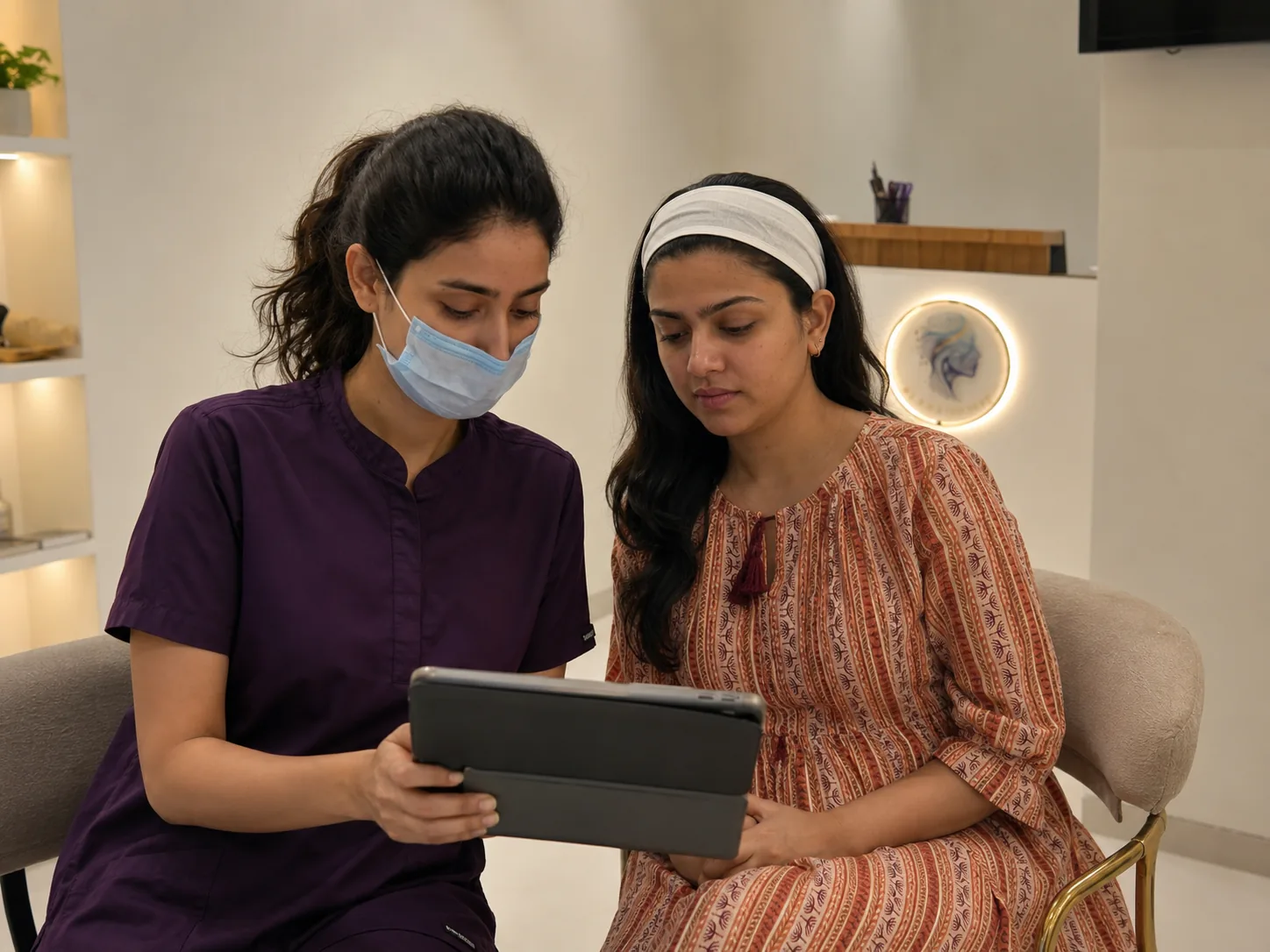
- Screening: a health questionnaire and the clinic’s AI IV recommendation logic produce a proposed composition; the doctor reviews it against the medical history, medication and exclusions, and confirms or changes it. Blood pressure, pulse and, where indicated, a blood-sugar reading are taken.
- Composition: the carrier bag is prepared and the actives — glutathione, vitamin C, B vitamins, N-acetyl cysteine, amino acids, antioxidants — are drawn up from sealed vials with sterile technique on the day. Nothing is pre-mixed and stored.
- Access: the skin is cleaned, a small cannula is placed in a forearm or hand vein, and its position is confirmed with a saline flush. Most clients describe a brief pinch.
- Infusion: the giving set is connected and the rate set. Vitamin C in high doses and NAD+ are given slowly because a fast rate causes flushing, cramping or nausea; glutathione and hydration drips run more quickly.
- Monitoring: a therapist stays with the client, watches the site for swelling or pain, and checks how the client feels; the drip is slowed or paused at the first sign of discomfort.
- Removal and observation: the cannula is removed, pressure applied for a minute, a small dressing placed, and the client sits for ten to fifteen minutes before leaving.
Glutathione — what the most-requested drip actually contains and does →
Dose, rate and osmolarity: the three numbers that matter
Every active in a drip has a dose range with evidence behind it and a ceiling beyond which risk rises without benefit. The clinic’s standard glutathione dose is 2,400 milligrams; the vitamin C dose is selected per client by the recommendation logic and screening rather than defaulted to the highest number a brochure can print. The rate is set so that the body can handle the load — a gram of vitamin C over a few minutes is unpleasant and pointless; over forty minutes it is well tolerated. Osmolarity — the concentration of dissolved particles in the bag — is kept close to that of blood by choosing the volume of carrier fluid for the actives added; a bag that is too concentrated irritates the vein and causes the aching, reddened phlebitis that is the most common complaint about badly run drips. These three numbers are the difference between a clinical infusion and a cocktail.
Who cannot have an IV drip
The screening exists because an intravenous route removes the body’s own safeguards. Our exclusions, applied before any composition is confirmed:
- Pregnancy and breastfeeding — no wellness IV protocols
- Kidney disease or reduced kidney function — high-dose vitamin C and fluid loads are both a risk
- Heart failure or conditions where a fluid load is dangerous
- G6PD deficiency — high-dose vitamin C can trigger red-cell breakdown; this is asked about and, where there is any doubt, tested before a high-dose vitamin C drip
- A history of kidney stones, for high-dose vitamin C
- Known allergy to any component, including sulphite preservatives in some glutathione preparations
- Active infection with fever, uncontrolled blood pressure, or acute illness on the day
- Asthma, for glutathione — a documented though uncommon bronchospasm risk; discussed and, if proceeding, given slowly with observation
- Clients on blood thinners, diabetes medication or thyroid treatment are not excluded but need the doctor’s review of the composition and rate
- Under 18
A drip that is refused on screening is a drip that was going to be unsafe. We would rather send you home than run it.
What can go wrong, and how it is prevented
| Risk | How common | Prevention and response |
|---|---|---|
| Bruising at the cannula site | Common, minor | Pressure after removal; resolves in days |
| Vein irritation (phlebitis) | Uncommon | Correct osmolarity and rate; warm compress if it occurs |
| Flushing, metallic taste, nausea | Occasional with vitamin C, NAD+ | Slow the rate; usually settles in minutes |
| Fluid leaking around the vein (extravasation) | Rare | Site watched throughout; drip stopped and re-sited at the first swelling |
| Low blood pressure or light-headedness | Rare | Client reclined, drip paused, observed until recovered |
| Allergic reaction | Rare | Emergency medication on hand; doctor on site; drip stopped immediately |
| Infection | Very rare | Single-use sterile kit; aseptic preparation; no pre-mixed bags |
IV drips and Jaipur conditions
- Dehydration: clients arrive from the heat genuinely dry, and the carrier fluid itself is often the most noticeable benefit of a summer drip. Arriving hydrated makes the cannula easier to place and the session more comfortable.
- Wedding season: a pre-bridal series is spaced across weeks, not stacked in the final days; the body uses what it can and excretes the rest, and a drip the night before a function adds nothing but a bruise risk.
- Travel: the jet-lag and recovery drip is most useful within a day or two of landing, when oral fluids and sleep have not caught up.
- Heat and veins: in a hot waiting room veins are dilated and easy; in a cold, air-conditioned one they are not — we warm the arm if needed rather than attempt repeatedly.
- Expectations: Jaipur has no shortage of places offering a “whitening drip” in a salon chair. An IV is a medical procedure; the screening, the sterile preparation and the doctor on site are the product, not the bag.
What to expect
A brief pinch, then forty-five to ninety minutes in a reclining chair with the drip running — most clients read, work or sleep. Occasionally a cool feeling along the arm, a mild flush or a taste of vitamins. Afterwards, a small dressing, possibly a bruise, and for many clients a sense of being better hydrated and more alert the same day. Skin and hair benefits from the antioxidant and nutrient protocols develop over a series of sessions rather than from one, and are supportive rather than transformative. Results vary from person to person, and every session begins with the screening that decides whether it should happen at all.
Where we use IV Infusion (How a Drip Is Given) at AI Aesthetics
The treatments at our C-Scheme clinic that actually include it — each page explains the full protocol, suitability and price.
IV infusion: frequently asked questions
How is an IV drip given?
A small cannula is placed in a forearm or hand vein after screening, connected to a bag of sterile carrier fluid containing the day’s actives, and run at a set rate for 30 to 60 minutes while a therapist monitors you. The cannula is removed and you rest briefly before leaving.
Why IV instead of tablets or injections?
Intravenous delivery is one hundred per cent bioavailable and can carry gram-level doses in a controlled, monitored session. Oral glutathione is mostly broken down in the gut, oral vitamin C absorption saturates, and an intramuscular injection is limited to a few millilitres per site.
Does the cannula hurt?
A brief pinch during placement, then usually nothing. Arriving hydrated and warm makes the vein easier to find.
How long does an IV session take?
45 to 90 minutes including screening and observation. High-dose vitamin C and NAD+ are run slowly to avoid flushing and nausea; hydration and glutathione drips run faster.
Who cannot have an IV drip at AI Aesthetics?
Pregnant or breastfeeding clients, anyone with kidney disease, heart failure, G6PD deficiency, a history of kidney stones for high-dose vitamin C, active infection or fever, uncontrolled blood pressure, allergy to a component, or under 18. Asthma and certain medications require the doctor’s review.
What is G6PD and why is it asked about?
An inherited enzyme deficiency in which high-dose vitamin C can cause red blood cells to break down. It is screened for by history and, where there is doubt, tested before a high-dose vitamin C drip.
What are the side effects of an IV drip?
Commonly a small bruise; occasionally vein irritation, a flush, a metallic taste or mild nausea that settles when the rate is slowed. Serious reactions are rare and the clinic is equipped and staffed to manage them.
Is the drip mixed in advance?
No. Actives are drawn from sealed vials with sterile technique on the day, into a fresh bag, with a single-use cannula and giving set. Pre-mixed, stored bags are an infection risk we do not take.
How many drips do I need?
Hydration and recovery drips work as single sessions. Antioxidant, skin-support and hair-support protocols are planned as a spaced series, with the composition reviewed as you go.
Who decides what goes in my drip?
The clinic’s AI IV recommendation logic proposes a composition from your questionnaire; the doctor reviews it against your history, medication and the exclusions, and confirms or changes it. Final decisions are always doctor-led.