Q-Switched Laser: How It Works for Pigmentation, Carbon Facials and Toning
If the diode laser is about heat, the Q-switched laser is about shock. It is the device behind the carbon facial, laser toning for melasma and the treatment of dark spots and tan — and it is also the laser most often misused on Indian skin. This page explains the physics in plain terms, what each of its three wavelengths is for, why our treatment engine blocks it in several common situations, and what a realistic result looks like.
Content verified by Dr. Aakriti Mehra
4.9 · 30 Google reviews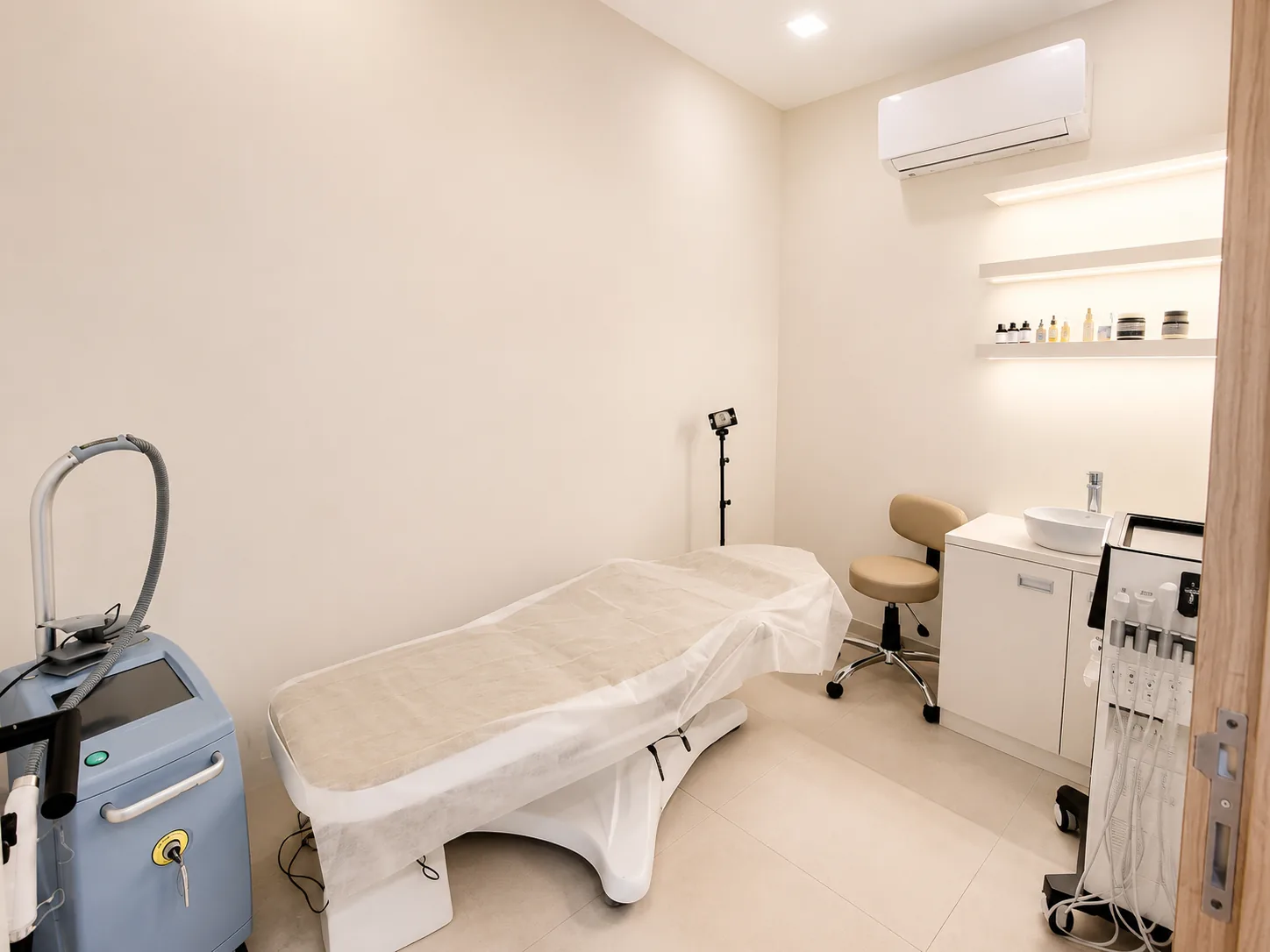

Nanoseconds: why this laser shatters pigment rather than heating it
“Q-switching” is an engineering trick inside the laser cavity. The laser stores energy and then releases it all at once in an extraordinarily short pulse — a few billionths of a second. The total energy is modest, but delivered in that tiny window the peak power is enormous. When such a pulse hits a melanin granule or a carbon particle, the target heats and expands faster than the surrounding tissue can respond. It fractures into fragments small enough for the skin’s immune cells to carry away. This is a photoacoustic effect, not a thermal one: the surrounding skin is barely warmed, which is why there is no burn and almost no downtime.
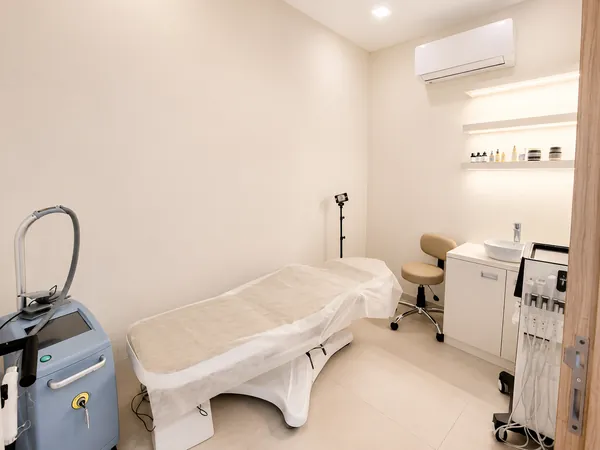
That same precision is why the Q-switched laser is useless for hair removal — a follicle needs sustained heat, not a shock — and why the two devices sit side by side in our laser room doing completely different jobs.
Three wavelengths, three targets
| Wavelength | Depth | Target | Used for |
|---|---|---|---|
| 532 nm (green) | Superficial | Melanin in the upper epidermis | Freckles, sun spots and lentigines on lighter skin; used sparingly on Indian skin |
| 755 nm | Mid | Melanin, with less competition from blood | Selected superficial pigment where 532 nm is too aggressive |
| 1064 nm (near-infrared) | Deep | Dermal melanin, carbon particles | Carbon facial, laser toning for melasma, deeper and dermal pigmentation — the safest wavelength on darker skin |
On Indian skin, 1064 nm does most of the work. Its low absorption by epidermal melanin lets it pass through a pigmented surface to reach pigment sitting deeper, without flashing the surface. The shorter wavelengths are precise tools used for specific, well-defined spots after assessment — not for a full-face pass.
The machine’s working range
| Parameter | Range | In practice |
|---|---|---|
| Pulse energy | 100 – 2000 mJ | Low energies for toning and carbon passes; higher, focused energies only for defined lesions |
| Repetition rate | 1 – 10 Hz | Faster rates for even full-face toning; slower for spot work |
| Spot size | Adjustable | Larger spots penetrate deeper at the same energy — chosen per target |
The carbon facial: what the carbon is for
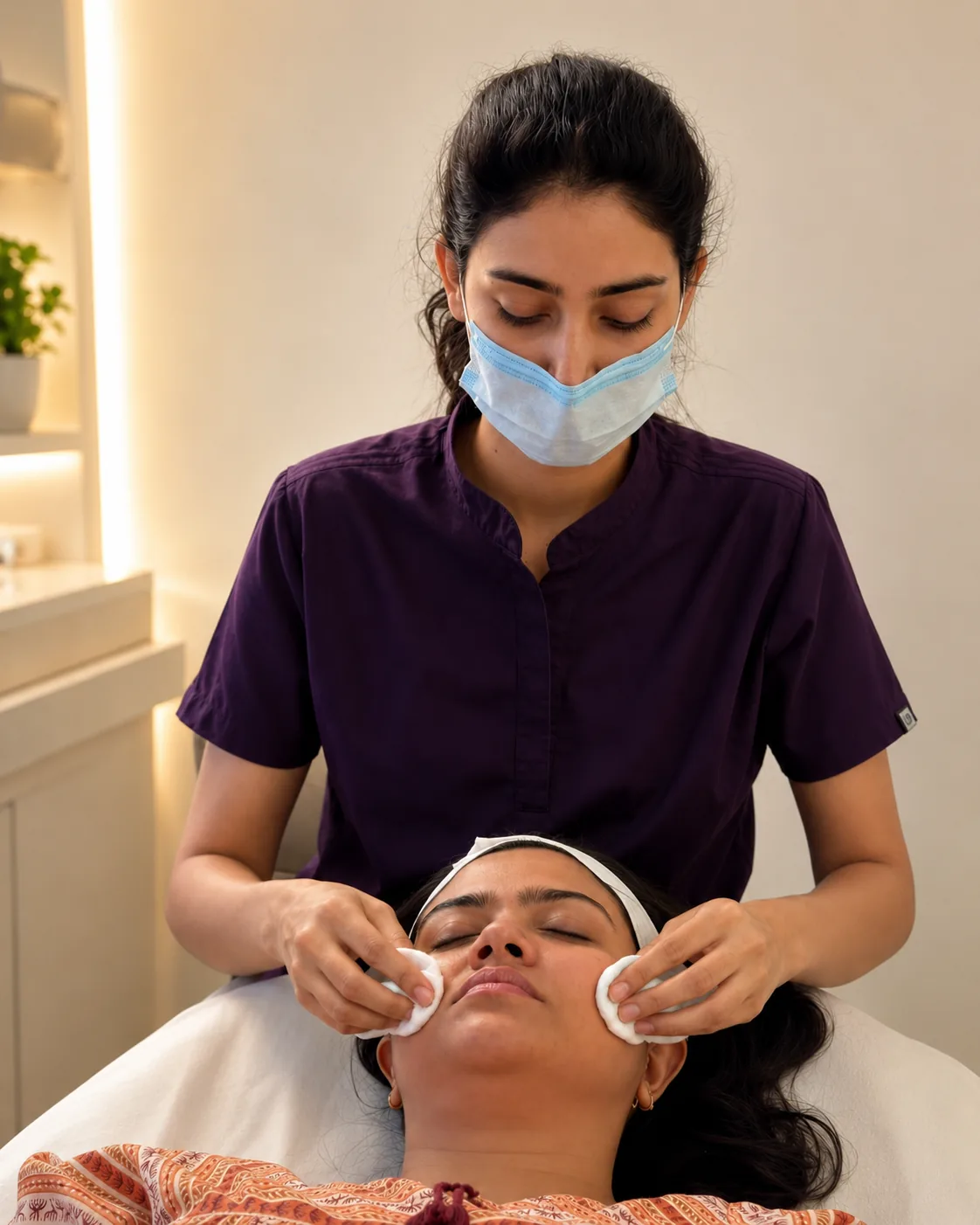
A carbon facial starts with a thin layer of liquid carbon lotion painted onto cleansed skin and left to settle into the pores and surface texture. The 1064 nm Q-switched laser is then passed across the face. The carbon absorbs the pulse intensely, shatters, and takes with it the oil, dead cells and debris it had bonded to — a “laser peel” that is heard as a crackle and felt as warmth. A second, lower-energy pass delivers gentle dermal heating that stimulates collagen and tightens the look of pores.
The result is immediate polish: cleaner pores, a matte but luminous finish, and less visible oiliness, with no peeling or downtime. Our facial engine treats the carbon facial as a genuine corrective option for oily, congested, acne-prone and dull skin — including active acne, where it remains valid — and compares it head to head against salicylic and other peels for each case rather than defaulting to either.
Laser toning for melasma — the honest version
Laser toning means repeated, low-energy, large-spot passes of 1064 nm across the face to gradually fragment dermal melanin without wounding the surface. For melasma and diffuse pigmentation on Indian skin it can produce visible evening of tone over a series. It also has a well-documented dark side: overuse — too many sessions, too close together, too high an energy — can exhaust melanocytes and leave patchy white spots, or trigger rebound darkening. Melasma is a hormonally driven, relapsing condition; the laser manages it, it does not cure it.
At AI Aesthetics, toning is one component of a melasma plan that always includes rigorous sun protection and usually tranexamic acid and brightening actives, with sessions capped and spaced, and photographs at every visit to catch any early lightening before it becomes a problem. If you have been offered weekly toning indefinitely, be cautious.
When our treatment engine blocks the Q-switched laser
The rules below are written into the clinic’s treatment-planning constraints and applied to every facial plan before a doctor reviews it. They are specific to Jaipur life and worth reading before you book:
- More than two hours of daily sun exposure — the laser is not scheduled, and medium or deep peels are not either, until exposure is controlled
- Travel in the next seven days, or a social event in the next seven days — no Q-switched laser; if anything unexpected happens, you need a week to recover quietly
- Salicylic or glycolic acid used the previous day, or retinol in the past 24 hours — the skin is already sensitised; the laser waits
- Any laser or high-heat treatment in the past seven days — no laser in this session
- Pregnancy — all energy devices are off the table; only hydradermabrasion and the gentlest peels are used
- Facial surface temperature of 36.9 °C or more at the start of the session — heat and high-intensity modalities are blocked
- Active acne lesions — the Q-switched laser is never used as the standalone corrective treatment at any energy; carbon facial remains an option, and lesion-directed salicylic treatment is added
A barrier that is clearly compromised on the scan — high sensitivity index, strong redness, low hydration — also blocks it. These are hard limits, not preferences, and they exist because the Q-switched laser’s precision makes it unforgiving on skin that is not ready for it.
What a session is like, and what to expect
Cleansing, protective eyewear, then a series of rapid passes — each pulse feels like a light flick or warmth, with the crackle of carbon if it is a carbon facial. A full face takes fifteen to twenty minutes. Mild pinkness for an hour or two is normal; there is no peeling. Sunscreen is applied before you leave and must be reapplied through the following days.
For carbon facials, the polish and pore effect is visible the same day and builds over a monthly series. For pigmentation and toning, change is gradual: lightening of spots over several sessions, and evening of tone over a planned course, always in combination with sun discipline and topical actives. Results vary from person to person, and any pigmentation plan without sunscreen in Jaipur will disappoint.
Who should not have Q-switched laser treatment
- Pregnant or breastfeeding clients
- Anyone with a fresh tan, sunburn or more than two hours of unprotected daily sun
- Clients on isotretinoin or photosensitising medication
- Active infection, cold sores or open skin on the face
- A tendency to keloid scarring, or a history of post-laser hypopigmentation
- Active acne as the sole concern — a different corrective is chosen
- Anyone who cannot commit to daily sunscreen for the course — the risk of rebound darkening outweighs the benefit
Where we use Q-Switched Laser at AI Aesthetics
The treatments at our C-Scheme clinic that actually include it — each page explains the full protocol, suitability and price.
Q-switched laser: frequently asked questions
What is a Q-switched laser?
A laser that releases its energy in pulses lasting billionths of a second. The extremely high peak power fractures pigment particles — melanin or carbon — by a shock effect rather than by heating the skin, which is why it treats pigmentation with little or no downtime.
How is a Q-switched laser different from the hair removal laser?
The diode hair removal laser heats follicles over sustained pulses; the Q-switched laser shatters pigment in nanosecond pulses with almost no heating. They treat different problems and cannot substitute for each other.
Is Q-switched laser safe for Indian skin?
At 1064 nm, with conservative energies, spaced sessions and strict sun rules, it is one of the better-suited pigment lasers for darker skin. Misused — too frequent, too strong, on tanned skin — it can cause white patches or rebound darkening, which is why our engine enforces blocking rules.
What is laser toning?
Repeated low-energy 1064 nm passes over the whole face to gradually fragment dermal pigment in melasma and diffuse pigmentation. It is used in a capped, spaced series alongside sunscreen and topical actives, never indefinitely.
How does a carbon facial work?
A thin carbon lotion is applied to the skin, and the 1064 nm Q-switched laser shatters it along with the oil and debris it has bonded to, then a second pass gently heats the dermis. The result is cleaner pores and a polished finish with no downtime.
Does the Q-switched laser hurt?
Most clients feel a light flicking or warmth and hear a crackle during a carbon facial. No numbing is needed, and pinkness settles within hours.
Why won’t the clinic do my laser session before my trip?
Our treatment constraints block the Q-switched laser when travel or a social event falls within the next seven days, and when daily sun exposure exceeds two hours. Any unexpected reaction needs a quiet week, and sun on freshly lasered skin can cause darkening.
Can the Q-switched laser treat active acne?
Not on its own. Our rules exclude it as a standalone corrective for active acne at any energy. A carbon facial may still be chosen, and lesion-directed salicylic treatment is added for active spots.
How many Q-switched sessions are needed?
Carbon facials are typically monthly for a polish-and-pore series; pigmentation and toning courses are planned over several spaced sessions with review, and melasma is managed long term rather than finished. Results vary.
What should I avoid before a Q-switched laser session?
Sun exposure, glycolic or salicylic acid the day before, retinol within 24 hours, and any laser or high-heat treatment in the previous week. Tell us about medications, pregnancy and upcoming travel at booking.