Radiofrequency Skin Tightening: How RF Heat Rebuilds Collagen
Lasers work by being absorbed by something — pigment, water, carbon. Radiofrequency works by being resisted. It passes an alternating current through the skin, and the tissue’s own electrical resistance turns that current into heat exactly where it flows. Because no pigment is involved, RF is the one energy treatment that is genuinely indifferent to skin colour, which is why it is the first tightening technology we reach for on Indian skin. This page explains the physics, the difference between the configurations, what the 1–10 scale on our machine means, where RF appears in our facials, and who should not have it.
Content verified by Dr. Aakriti Mehra
4.9 · 30 Google reviews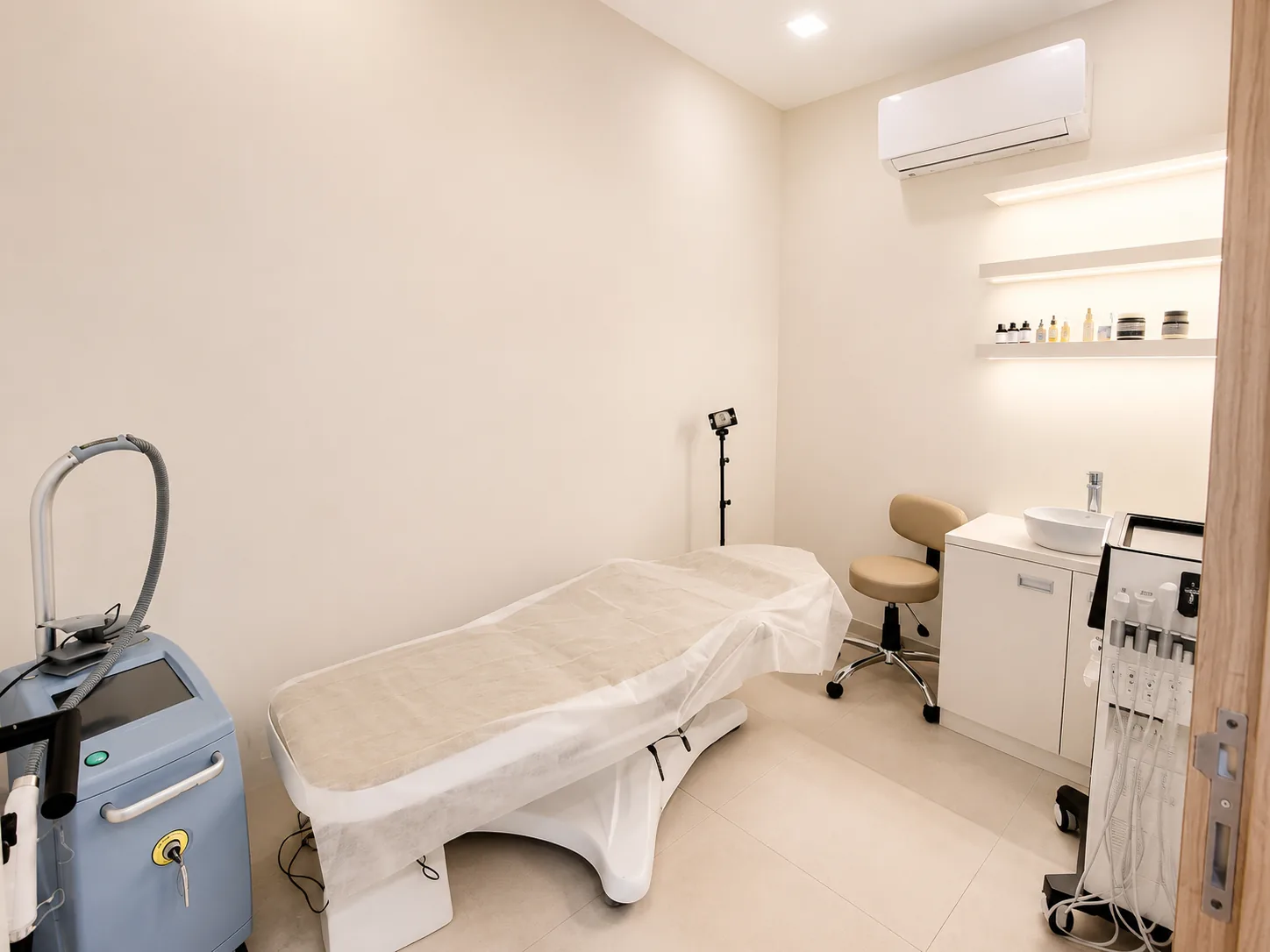

The physics: resistance becomes heat
Radiofrequency devices generate an electromagnetic current oscillating at a few million cycles per second — far too fast to stimulate nerves or muscle, which is why it does not shock or twitch. When that current passes through the skin, the dermis resists it, and resistance produces heat (the same principle that warms a toaster wire). The handpiece is moved continuously so the heat builds gradually and evenly, and the aim is to hold the dermis at roughly 40 to 43 °C for several minutes while the surface, protected by a coupling gel and the device’s own cooling, stays comfortable.
That temperature window is chosen for two effects. Immediately, the triple-helix structure of existing collagen partially unwinds and contracts — a modest tightening you can sometimes see as the session ends. Over the following weeks, the heat injury signals fibroblasts to produce new collagen and elastin; this remodelling continues for three to six months and is where the real result comes from.
At a glance
| Property | Detail |
|---|---|
| Energy type | Alternating electromagnetic current, typically 1–6 MHz |
| Target | Dermal water and tissue resistance — no pigment involved |
| Working temperature | ≈ 40–43 °C in the dermis, sustained |
| Machine energy scale | 1–10, set per zone and client |
| Skin types | All — colour-blind by mechanism |
| Downtime | None; mild warmth and pinkness for an hour or two |
| Course | Typically 6–8 sessions, one to two weeks apart, then maintenance |
Monopolar, bipolar and multipolar — what the words mean
| Configuration | How the current flows | Depth | Character |
|---|---|---|---|
| Monopolar | From the handpiece through the body to a grounding pad | Deepest — reaches the lower dermis and the fat–fascia boundary | Most powerful; more sensation; the classic single-session tightening approach |
| Bipolar | Between two electrodes on the same handpiece, a few millimetres apart | Shallower — upper and mid dermis | Controlled, comfortable, suited to repeated sessions and delicate zones |
| Multipolar | Between several electrodes on the handpiece | Mid dermis, broad coverage | Even heating over larger areas; the common choice for face and neck courses |
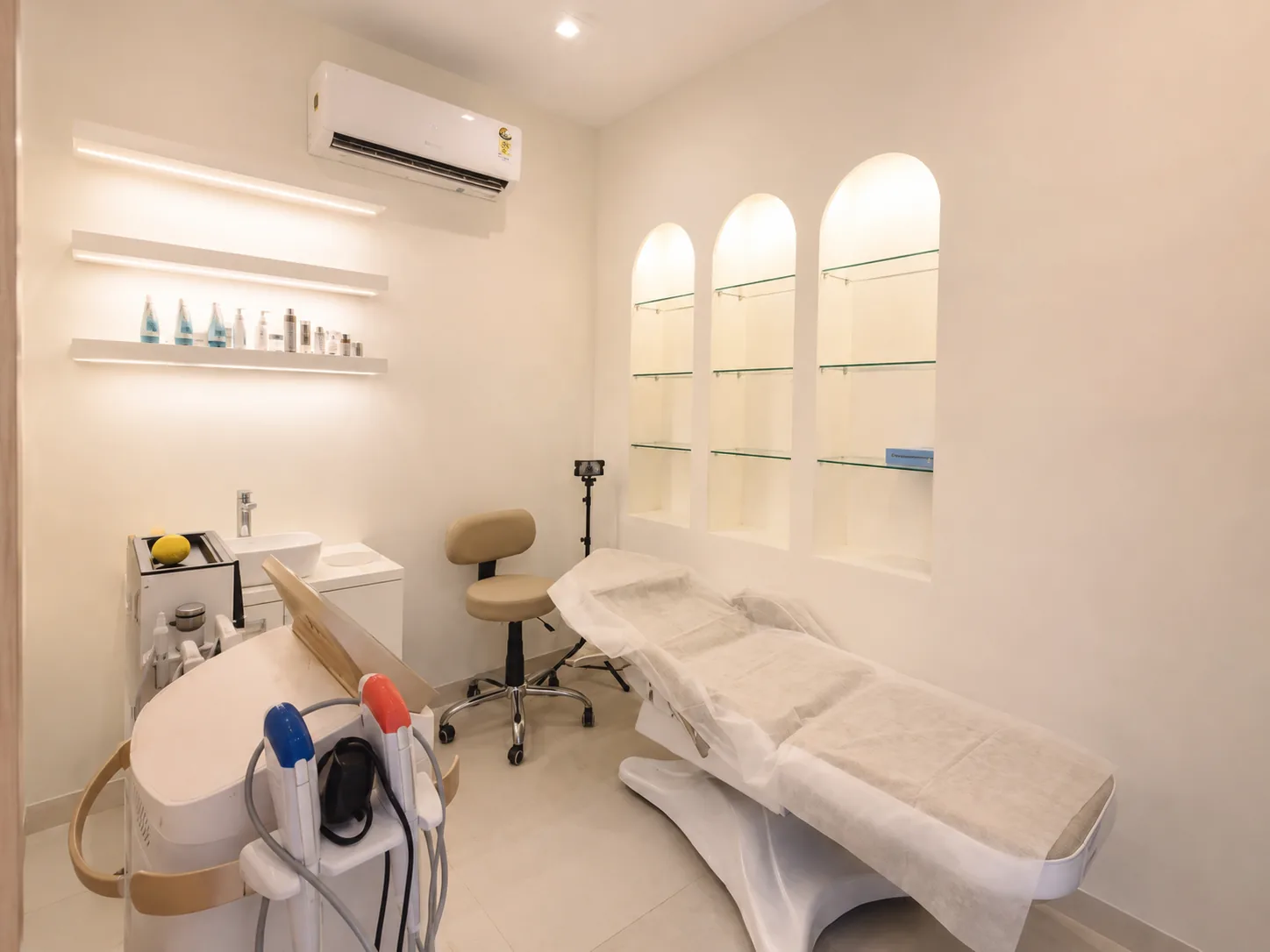
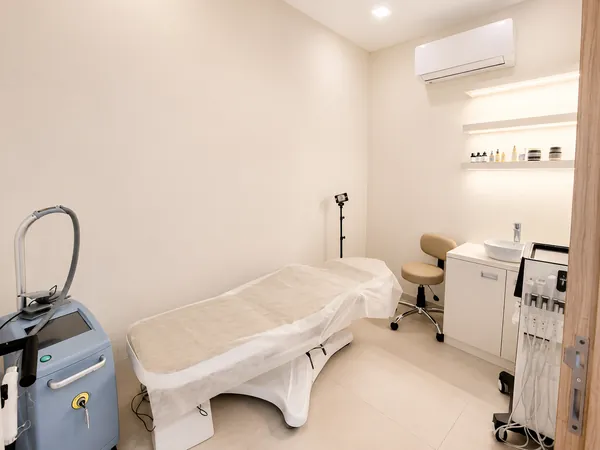
The RF machine at AI Aesthetics is run on its 1–10 energy scale with the configuration set for the zone: lower levels and shallower reach around the eyes and jawline, higher levels on the cheeks and neck where the skin is thicker. The same technology appears as the lifting probe on our hydradermabrasion system, where a gentler RF pass is built into a facial for early laxity.
What RF does well — and what it does not
- Early-to-moderate laxity: softening of the jawline, early jowls, crepey skin on the neck and under the chin, loss of firmness in the cheeks
- Skin quality: smoother texture and a firmer feel, because new collagen improves the dermis itself, not just its shape
- Prevention: clients in their thirties and forties who want to slow laxity before it is visible — RF is well suited to maintenance courses
- Not a facelift: it tightens skin, it does not reposition tissue. Significant sagging, heavy jowls or a descended neck need HIFU for the deeper layer, a thread lift, or a surgical opinion
- Not fat reduction: facial RF at these settings does not meaningfully reduce fullness
How AI Aesthetics decides on RF
Our treatment-planning constraints treat energy devices as allowed by default — they are not withheld out of conservatism — but they are denied when specific safety gates trip: a severely compromised barrier on the scan, strong redness, very low hydration, or an elevated facial surface temperature of 36.9 °C or more. In the caution bands, RF proceeds at lower settings with fewer passes. If a laser or high-heat treatment was done in the past seven days, only non-ablative RF, LED, hydradermabrasion or barrier repair are permitted in the session, which makes RF one of the few correctives available in that window. Pregnancy excludes it entirely, along with every other energy device.
Because RF heats, your skin temperature is read before the session. A hot, reactive face on a May afternoon is cooled down first or treated another day; the reading is not a formality.
RF and Jaipur skin
- Colour-blind is the point: on skin types IV and V, RF carries none of the pigment-absorption risk that makes some lasers hazardous. It is the tightening technology we recommend first for Indian skin.
- Hot months: arrive cool and hydrated; sessions are scheduled away from the hottest hours, and the pre-session temperature check matters most in April to June.
- Dehydrated dermis heats less evenly. The engine often precedes an RF course with hydration — hyaluronic acid infusion — so the tissue responds predictably.
- Timelines and events: a course begun in August shows its remodelling by the wedding season; one begun in November shows it in spring. RF rewards planning, not last-minute booking.
- Sun afterwards is fine with sunscreen — RF does not sensitise the surface the way peels do — but sunburn on treated skin is to be avoided like any other.
Who should not have radiofrequency
- Pregnancy — all energy devices are excluded
- A pacemaker, implanted defibrillator or other electronic implant — the current can interfere
- Metal implants, plates or screws in the treatment area, and metal dental work directly under a treatment zone is discussed case by case
- Active infection, open wounds, cold sores or a severe acne flare in the area
- Autoimmune connective-tissue conditions in flare, or a history of keloid scarring
- Dermal fillers injected in the past two weeks — heat can affect their settling
- A facial surface temperature of 36.9 °C or more at the session, or scan indices showing a compromised barrier
What to expect
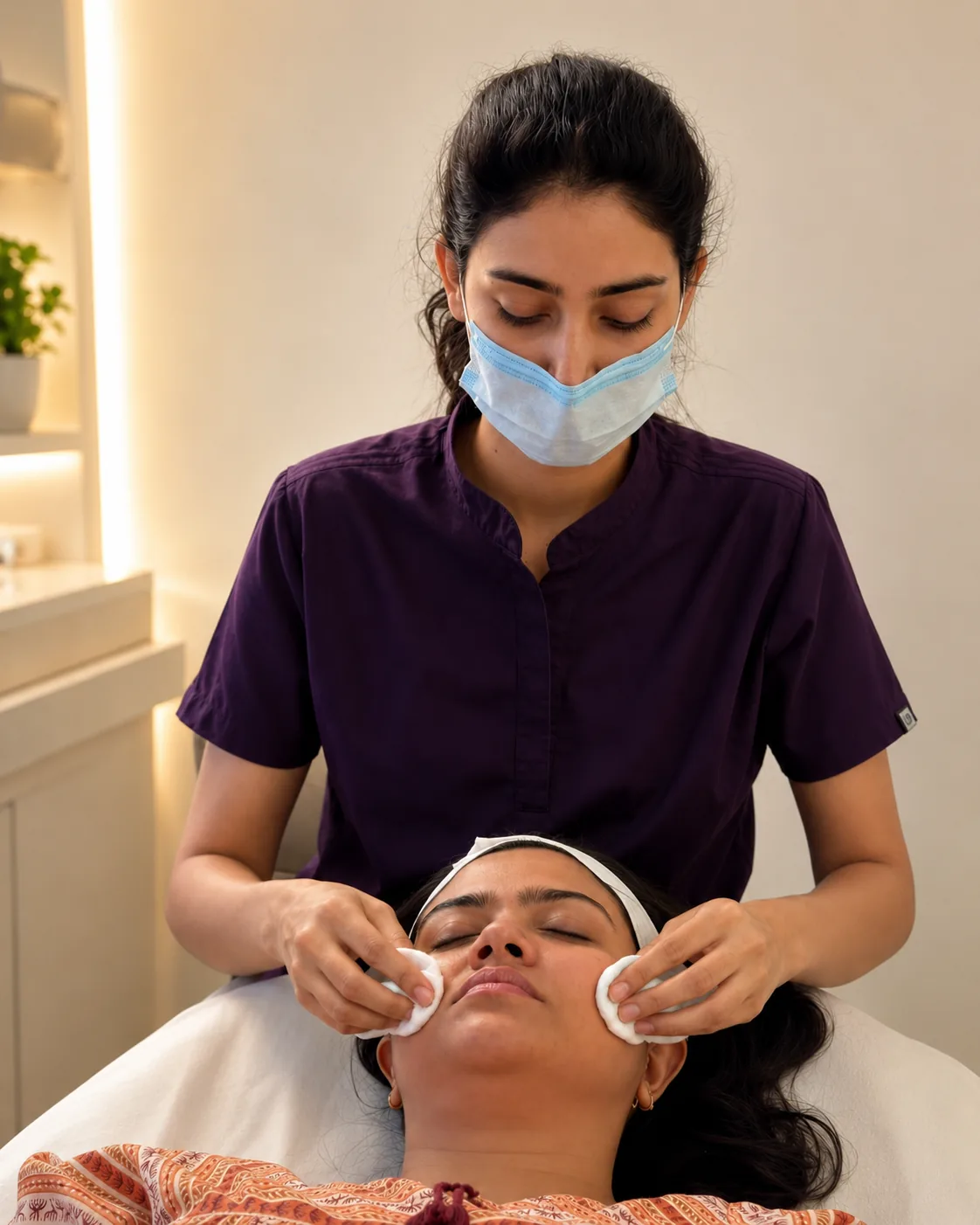
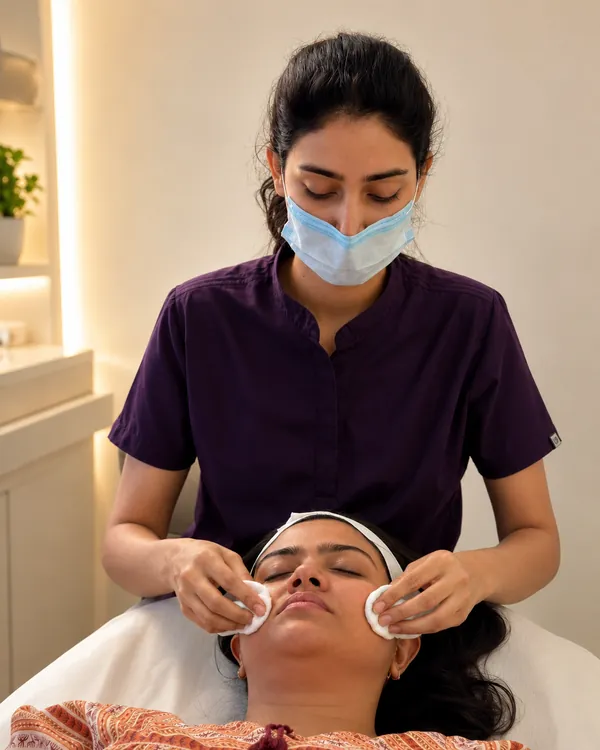
Coupling gel, then a warm handpiece moved steadily over each zone for several minutes — a deep, pleasant warmth that the therapist keeps within a target range using a surface thermometer. Thirty to forty-five minutes for a face, longer with neck. Mild pinkness and warmth for an hour or two; no downtime. A subtle tightness may be visible the same day; the genuine firming builds over the course and continues for months afterwards as collagen remodels. Most clients do a course of six to eight sessions and then maintenance every few months. Results vary from person to person and depend heavily on the starting degree of laxity.
Skin sagging treatment in Jaipur — RF, HIFU and threads compared →
Where we use Radiofrequency (RF) Skin Tightening at AI Aesthetics
The treatments at our C-Scheme clinic that actually include it — each page explains the full protocol, suitability and price.
Radiofrequency: frequently asked questions
How does RF skin tightening work?
An alternating current passes through the skin and the dermis’s own resistance turns it into heat. Holding the dermis at 40–43 °C contracts existing collagen slightly and triggers fibroblasts to build new collagen over the following months.
Is RF safe for dark or Indian skin?
Yes — RF does not involve pigment at all, so it carries none of the absorption risk some lasers have on darker skin. It is the tightening technology we recommend first for skin types IV and V.
What is the difference between monopolar and bipolar RF?
Monopolar current travels through the body to a grounding pad and reaches deepest; bipolar and multipolar current flows between electrodes on the handpiece and heats the upper and mid dermis in a more controlled way, suited to courses and delicate zones.
Does RF hurt?
No. It feels like a deep, steady warmth. The therapist monitors skin temperature so it stays comfortable, and there is no downtime.
How many RF sessions are needed?
Typically six to eight, one to two weeks apart, followed by maintenance every few months. Collagen remodelling continues for three to six months after the course.
Can RF replace a facelift?
No. It tightens skin and improves its quality; it does not reposition tissue. Moderate-to-severe sagging needs HIFU for the deeper layer, a thread lift, or a surgical opinion.
Who should avoid RF?
Pregnant clients, anyone with a pacemaker or electronic implant, metal implants in the area, active infection or severe acne, autoimmune flares, keloid tendency, recent fillers, or an elevated skin temperature or compromised barrier on the day.
Can I have RF after a laser treatment?
Our constraints allow only non-ablative RF, LED, hydradermabrasion and barrier repair within seven days of a laser or high-heat treatment, so gentle RF is one of the few options in that window.
Is RF used in your facials?
Yes — the lifting probe on our hydradermabrasion system is a gentle RF pass for early laxity, and the engine adds it for jawline definition and mature skin.
When will I see results from RF?
A subtle tightness may show the same day; real firming builds over the course and keeps improving for months as new collagen forms. Results vary with the starting degree of laxity.