HIFU: How Focused Ultrasound Lifts From the Facelift Layer Up
Every other tightening technology works on the skin. HIFU works beneath it. By focusing ultrasound energy to a point — the way a magnifying glass focuses sunlight — it heats a tiny volume of tissue at a precise depth while the layers above and below stay cool. Set that depth to 4.5 millimetres and the point lands in the SMAS, the fibrous layer surgeons tighten in a facelift. That is why HIFU is the strongest non-surgical lift we offer, why it is a one-session treatment, why its results arrive slowly, and why our treatment constraints restrict it to a specific age range. This page explains all of that.
Content verified by Dr. Aakriti Mehra
4.9 · 30 Google reviews

The physics: focus, not spread
A HIFU transducer emits ultrasound at a frequency of a few megahertz and shapes it so the waves converge at a fixed distance from the skin. At the focus, the energy density is high enough to heat tissue to around 65–70 °C for a fraction of a second, creating a pinpoint of thermal coagulation roughly a millimetre across. Away from the focus the beam is too diffuse to heat anything, so the epidermis is unaffected — no burn, no peeling, no pigment risk. The handpiece lays down a line of these points, then moves on, until the treatment area is mapped with thousands of them in a grid.
Each coagulation point does two things: it contracts the collagen in that spot immediately, and it triggers a wound-healing response that lays down new, tighter collagen over the following two to three months. The visible lift is the sum of thousands of tiny contractions in the layer that actually holds the face up.
At a glance
| Property | Detail |
|---|---|
| Energy type | Focused ultrasound, megahertz range |
| Effect at focus | Thermal coagulation points ≈ 65–70 °C, ~1 mm |
| Depths on our machine | 1.5 mm, 3 mm and 4.5 mm — three interchangeable probes |
| Skin types | All — no pigment interaction |
| Sessions | Usually one; review at three months; repeat at 12–18 months |
| Downtime | None to minimal; mild swelling or tenderness for days |
| Age rule in our constraints | Used only when clinically indicated and the client is 30 to 60 |
Three depths, three targets
| Probe | Reaches | What it does | Used on |
|---|---|---|---|
| 4.5 mm | The SMAS — the fibromuscular layer beneath the fat | Lifts: tightens the structural layer that sags with age | Cheeks, jawline, under the chin, where the tissue is thick enough |
| 3 mm | Deep dermis | Firms: thickens and tightens the skin itself | Face and neck generally |
| 1.5 mm | Superficial dermis | Refines: texture, fine lines, delicate zones | Around the eyes, forehead, thinner areas |
A full HIFU session typically uses two or three depths in sequence over each zone, lifting from below and firming from above. The depth is matched to the anatomy — 4.5 mm is never used where the tissue is too thin to contain it, such as the forehead or directly over bone.
The 30-to-60 rule
Our treatment-planning constraints include a patient-history rule written specifically for this device: HIFU is included only when clinically indicated and the client is between 30 and 60 years of age inclusive. The reasoning is honest on both ends. Below thirty, there is rarely enough laxity in the SMAS for HIFU to improve — the treatment would be heating a layer that has not yet loosened, with discomfort and cost for little return; RF or skin-quality treatments serve better. Above sixty, the skin’s capacity to produce new collagen in response to the thermal signal is reduced and the laxity is often beyond what a non-surgical lift can address convincingly; a thread lift or a surgical consultation is the more truthful recommendation. The rule is not a refusal to help — it is the engine declining to sell a treatment where the physics and the biology no longer favour it.
Radiofrequency — the tightening option for earlier laxity and all ages →
HIFU versus RF
| HIFU | Radiofrequency | |
|---|---|---|
| Depth | Precise points to 4.5 mm (SMAS) | Diffuse dermal heating |
| Effect | Lift of the structural layer plus firming | Firming and skin quality |
| Sessions | One, then yearly maintenance | A course of 6–8, then maintenance |
| Sensation | Brief deep aches at each point; numbing cream used | Gentle warmth |
| Best for | Moderate laxity, jawline and lower face, ages 30–60 | Early laxity, prevention, all ages, sensitive clients |
How AI Aesthetics plans a HIFU session
- A doctor-led assessment of laxity, tissue thickness and age against the constraints — not every face that asks for HIFU is a HIFU face
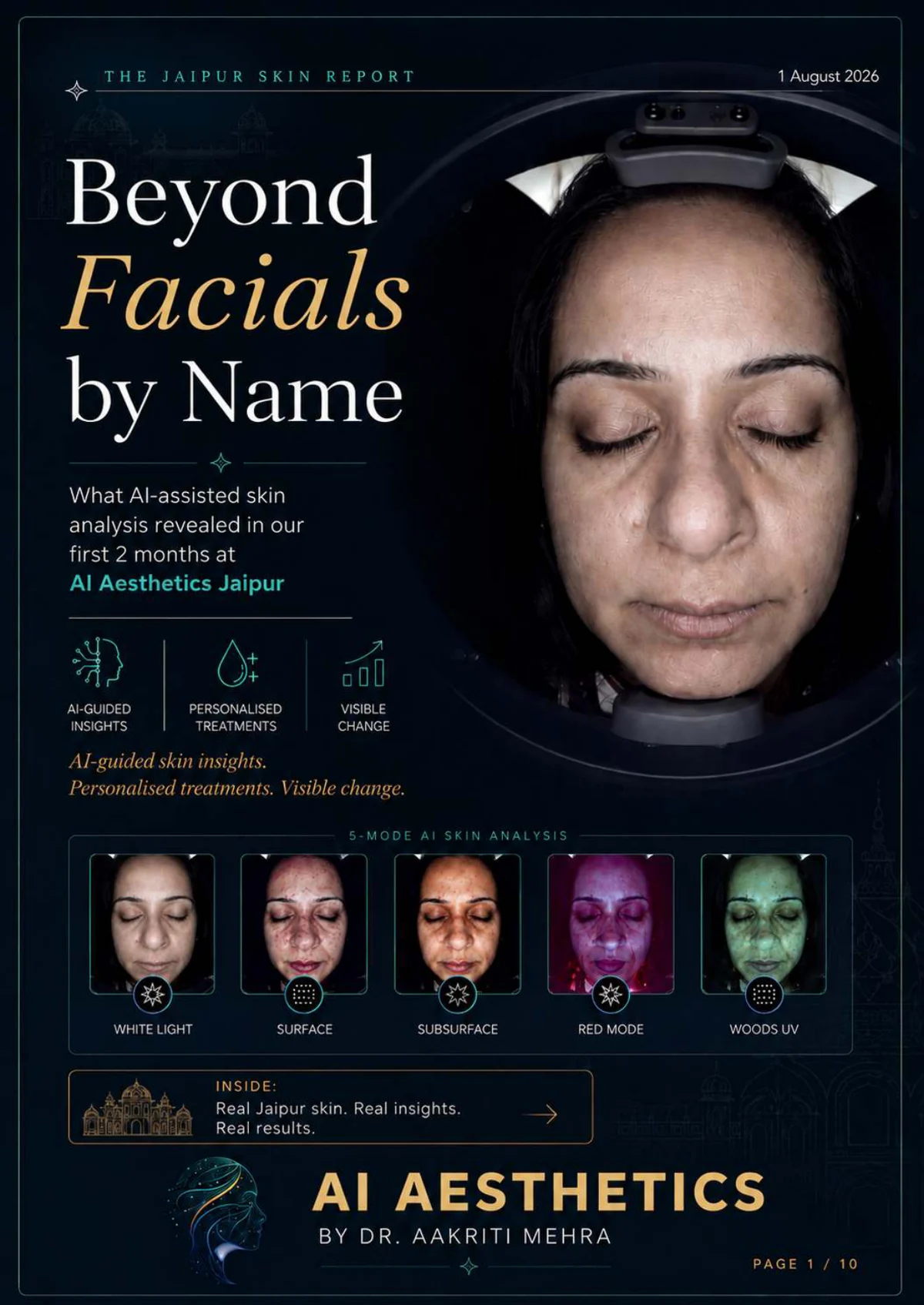
- The energy-device gates on the scan: a severely compromised barrier, strong redness or very low hydration deny it; caution bands reduce lines and energy
- A facial surface temperature check — 36.9 °C or more blocks heat-based devices that day
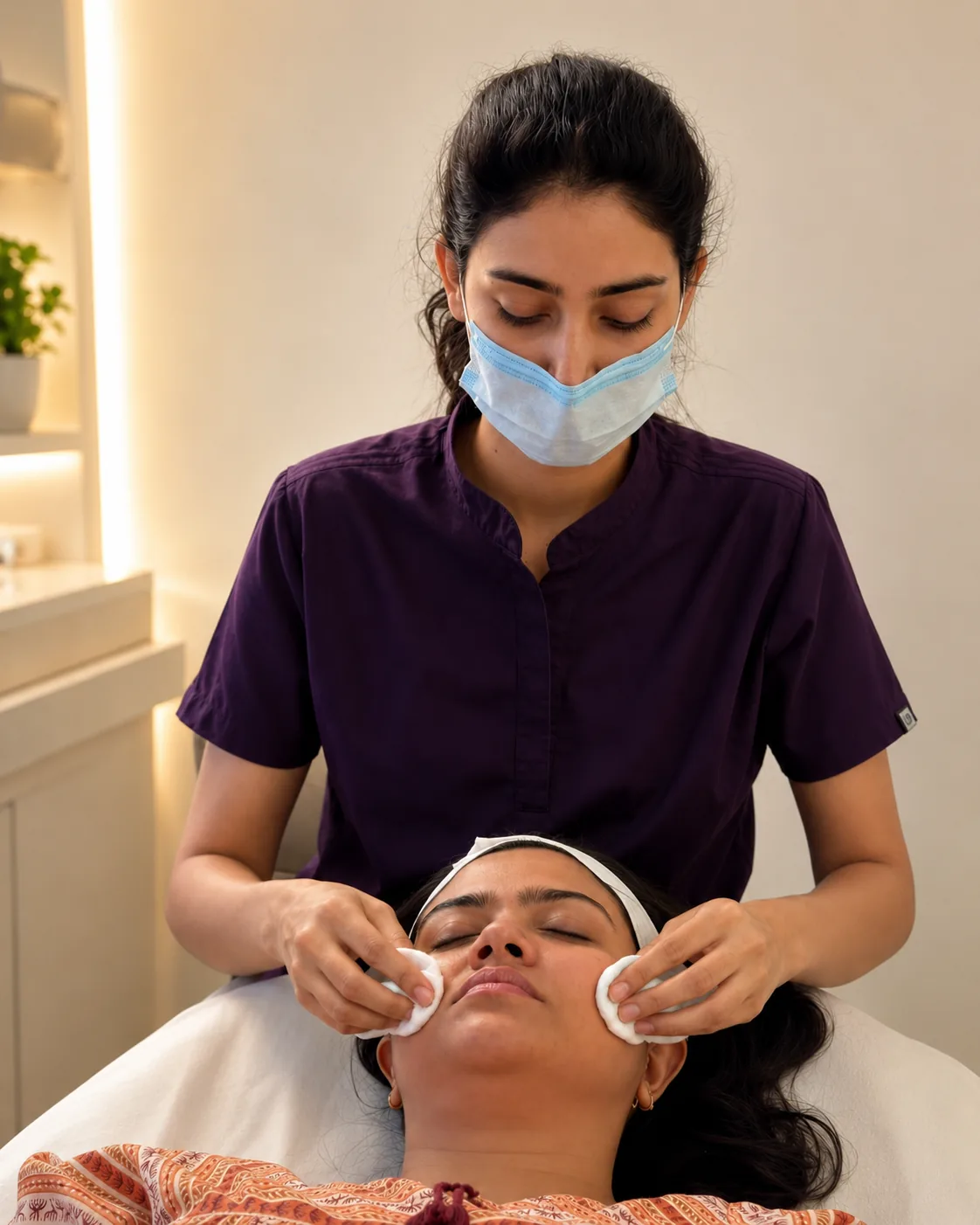
- Numbing cream for 30–45 minutes, then depth-by-depth treatment zone by zone, 45–90 minutes in all
- Photographs before, and at three months, because the result is gradual and the mirror lies
HIFU and Jaipur life
- Timing for weddings: the lift is visible at two to three months and best at three to six. For a December wedding, HIFU in August or September; HIFU in November shows only swelling in the photographs.
- Heat: the treatment itself is unaffected by season, but a swollen, tender face in 45 °C is unpleasant. Many clients prefer October to March.
- Sun afterwards is fine with sunscreen — the surface is untouched — but any lingering tenderness is worsened by heat and alcohol for a few days.
- Dehydration before the session makes the deep aches sharper; arrive hydrated and rested.
- Managing expectations in a city that loves dramatic before-and-afters: HIFU is a lift of millimetres, not centimetres, and it looks natural precisely because of that.
Who should not have HIFU
- Under 30 or over 60, by our constraints, unless the doctor documents a clear clinical indication
- Pregnancy — all energy devices are excluded
- Open wounds, active infection, cold sores or severe acne in the treatment area
- Metal implants, plates or threads in the treatment zone; pacemakers are assessed with caution
- Significant nerve conditions of the face, or a history of facial nerve injury
- Anticoagulants or bleeding disorders — bruising risk; our constraints limit such clients to gentle treatments
- Keloid tendency, autoimmune connective-tissue flares, and dermal fillers placed in the past two weeks
- Very thin tissue over bone — the deepest probe is withheld there regardless
What to expect
Brief, deep aches with each line of points — tolerable with numbing, most intense along the jawline and over bone. Afterwards: mild swelling, tenderness to touch and occasional small bruises for a few days; no peeling, no marks, normal activity the next day. A slight tightness may be noticeable immediately as collagen contracts. The lift itself develops gradually from about six weeks and peaks at three to six months, lasting a year or more before a maintenance session is considered. Results vary from person to person and depend on starting laxity, tissue thickness and age.
Where we use HIFU (High-Intensity Focused Ultrasound) at AI Aesthetics
The treatments at our C-Scheme clinic that actually include it — each page explains the full protocol, suitability and price.
HIFU: frequently asked questions
How does HIFU work?
It focuses ultrasound to a point at a set depth, heating a tiny volume to about 65–70 °C and creating thousands of pinpoint coagulations in the SMAS and dermis. Each point contracts collagen immediately and stimulates new collagen over two to three months, lifting the face from the structural layer up.
What do the 1.5, 3 and 4.5 mm depths mean?
They are the three probes on our machine: 4.5 mm reaches the SMAS for lift, 3 mm the deep dermis for firming, and 1.5 mm the superficial dermis for texture and delicate zones. A session uses two or three depths in sequence.
Why does AI Aesthetics only do HIFU between 30 and 60?
A rule in our treatment-planning constraints. Below 30 there is rarely enough laxity for HIFU to improve; above 60 collagen response falls and laxity usually exceeds what a non-surgical lift can address. RF, skin-quality treatments or a thread lift are recommended instead.
Does HIFU hurt?
There are brief, deep aches with each line of points, most noticeable over the jawline and bone. Numbing cream is applied beforehand and the session is well tolerated by most clients.
How many HIFU sessions are needed?
Usually one. Results are reviewed at three months, and a maintenance session is considered after 12 to 18 months.
When will I see HIFU results?
Slight tightness immediately, then a gradual lift from about six weeks, peaking at three to six months as new collagen forms. Plan it at least three months before an event.
Is HIFU safe for Indian skin?
Yes. Focused ultrasound does not interact with pigment and leaves the epidermis untouched, so there is no darkening risk from the energy itself.
HIFU or RF — which should I choose?
HIFU for moderate laxity in the lower face and jawline, ages 30–60, as a single lifting session. RF for early laxity, prevention, sensitive clients and all ages, as a course. The doctor’s assessment decides, and some clients use both at different times.
Can HIFU replace a facelift?
No. It lifts by millimetres and looks natural for exactly that reason. Significant sagging needs a thread lift or a surgical opinion.
Who should avoid HIFU?
Clients outside 30–60 without a documented indication, pregnant clients, anyone with open wounds or infection in the area, metal implants or threads in the zone, facial nerve conditions, anticoagulant use, keloid tendency, autoimmune flares or fillers placed within two weeks.