Glutathione: What It Is, How It Works, and How We Use It in Jaipur
Glutathione is probably the most searched — and most oversold — ingredient in Indian aesthetic medicine. It is marketed as a skin-whitening shot, a detox drip, an anti-ageing secret. Some of that has a basis in biochemistry; a lot of it does not. This page explains what glutathione actually is, what it does in your body, why it became associated with skin tone, how we use it at AI Aesthetics in Jaipur, and who should not have it at all.
If you only read one line: glutathione is a genuine, important antioxidant that your own liver makes every day. Given intravenously at a clinical dose, it can support recovery, freshness and glow. It is not a fairness treatment, and we do not sell it as one.
Content verified by Dr. Aakriti Mehra
4.9 · 30 Google reviews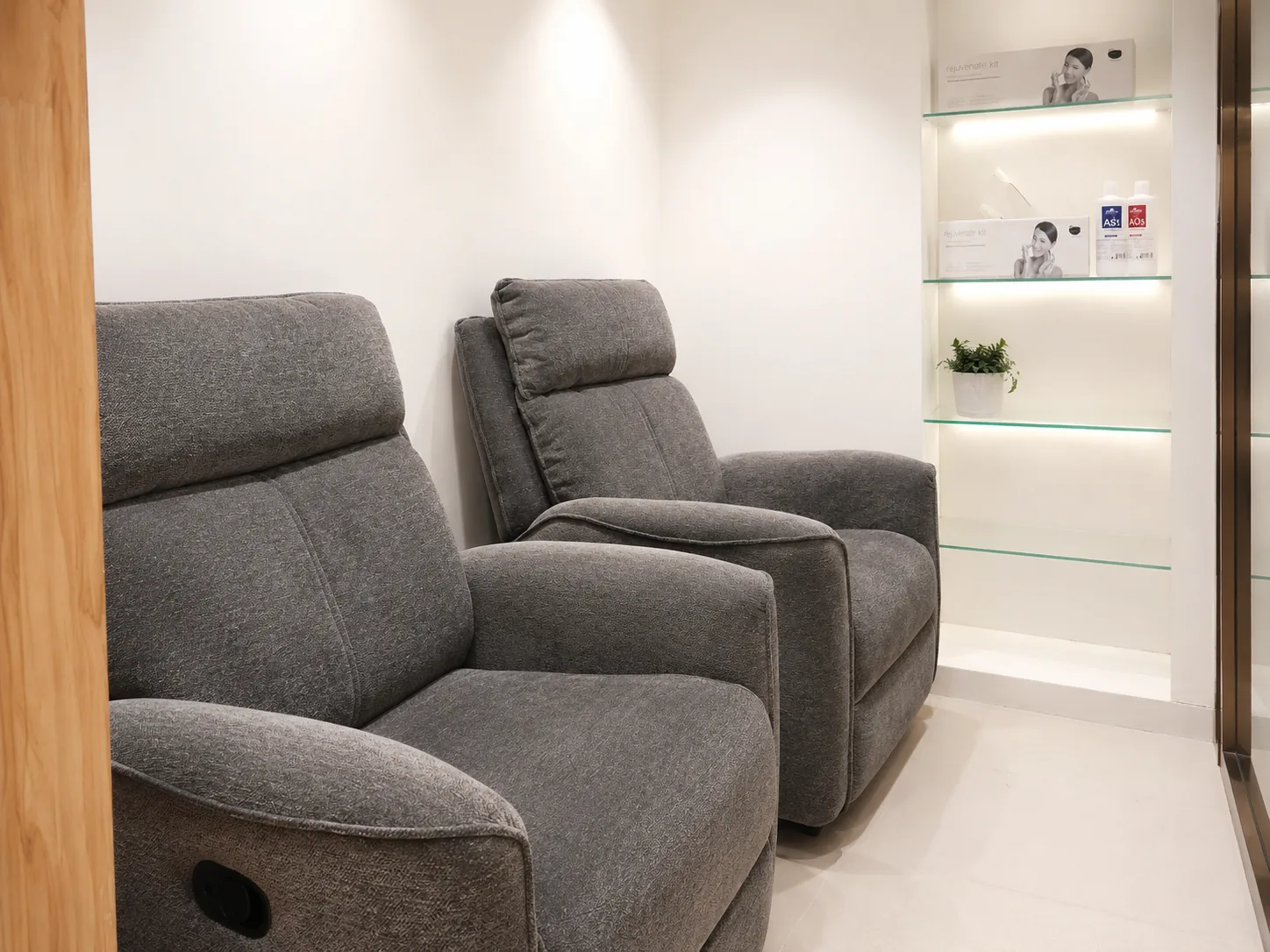

What glutathione actually is
Glutathione is a tripeptide — a very small protein made of just three amino acids joined in an unusual way: glutamate, cysteine and glycine. The chemical name is γ-L-glutamyl-L-cysteinyl-glycine, usually shortened to GSH. The “gamma” bond between glutamate and cysteine is what protects it from the enzymes that normally chew up small peptides, which is part of why it survives long enough inside cells to be useful.
Every nucleated cell in your body makes it, and the liver makes the most. It exists in two forms that constantly swap: reduced glutathione (GSH), the active form with a free thiol group, and oxidised glutathione (GSSG), two molecules joined after they have “spent” their electrons neutralising something harmful. A healthy cell keeps more than 90% of its glutathione in the reduced form; that ratio falling is one of the most reliable laboratory signs of oxidative stress.
The molecule at a glance
| Property | Detail |
|---|---|
| Chemical class | Tripeptide (γ-glutamyl-cysteinyl-glycine) |
| Molecular formula | C10H17N3O6S |
| Molecular mass | ≈ 307 g/mol |
| Active group | The thiol (–SH) on cysteine — this is the part that donates electrons |
| Made where | Inside every cell; the liver is the main producer and exporter |
| Rate-limiting ingredient | Cysteine — which is why its precursor, N-acetyl cysteine, is used to raise levels |
| What depletes it | UV exposure, smoking, alcohol, air pollution, poor sleep, acute illness, age |
Two jobs: antioxidant and detoxification
The thiol group on cysteine is the whole point of the molecule. It gives up an electron easily, which lets glutathione neutralise reactive oxygen species — the unstable by-products of metabolism, sunlight and pollution that damage proteins, membranes and DNA. Glutathione does this directly, and it also recycles other antioxidants: vitamin C and vitamin E both get “recharged” by glutathione after they have done their work. That is why it is often called the master antioxidant — it sits at the top of the chain.
The second job happens mostly in the liver. A family of enzymes called glutathione S-transferases attach glutathione to drugs, metabolic waste and environmental chemicals so they become water-soluble and can be excreted. When people talk about glutathione and “detox”, this is the real, measurable process they are gesturing at — and it is also why glutathione levels drop after illness, heavy medication, alcohol or smoke exposure.
Why glutathione became the “skin brightening” molecule
Melanin comes in two families. Eumelanin is brown-black; pheomelanin is yellow-red. The balance between them is set by an enzyme called tyrosinase and by the availability of thiol compounds inside the pigment cell. Glutathione affects this balance in three proposed ways:
- It binds the copper in tyrosinase’s active site, slowing melanin production overall
- Its thiol group diverts the melanin pathway towards lighter pheomelanin rather than darker eumelanin
- By mopping up reactive oxygen species, it removes one of the triggers that tells melanocytes to make more pigment after sun exposure
That is the mechanism. Now the honest part about evidence. Small clinical studies of oral and topical glutathione have shown modest, temporary improvements in skin tone that fade once the supplement stops. Evidence for intravenous glutathione producing lasting skin lightening is weak, and no regulator anywhere has approved it for that purpose. What IV glutathione reliably does is raise blood levels sharply for a short window, which is useful for antioxidant and recovery support — and some clients do see a fresher, more even-looking complexion in the days after a session, partly from that and partly from the hydration and vitamin C that go in with it.
So at AI Aesthetics we describe glutathione as glow and antioxidant support that can make tone look more even, never as skin whitening. Your natural skin colour is not a problem to be treated, and we will not take your money on that premise. If pigmentation is your actual concern, it needs a pigmentation plan — see below.
Oral, topical or IV: why the route decides almost everything
Swallowed glutathione mostly does not survive the gut. Digestive enzymes break the peptide apart, and what is absorbed is largely its component amino acids, which the body may or may not reassemble. Studies of oral supplementation show small or no rises in blood glutathione in many people — which is why the capsules on pharmacy shelves are such a mixed experience.
Topical glutathione faces a different wall: the molecule is water-soluble and relatively large, so it does not pass through intact skin well. It works best when the skin surface has just been exfoliated and the product is driven in with ultrasound or pressure — which is exactly how we use it inside facials.
Intravenous glutathione bypasses both problems. It goes straight into the bloodstream at a known dose, and blood levels rise within minutes. The trade-off is that those levels also fall again within hours as cells take it up and the kidneys clear it — so a single drip is a session, not a cure, and results build with a planned series rather than one visit.
How we use glutathione at AI Aesthetics
Glutathione appears in three places on our menu, and the route is chosen for the goal — not the other way round.
1. As an IV drip
Our Glutathione IV Drip uses a standard 2400 mg dose of glutathione with vitamin C in a hydration base, infused slowly over roughly 45 minutes to an hour. Vitamin C is there for a reason, not decoration: glutathione and vitamin C regenerate each other, so pairing them extends the antioxidant effect of both. The vitamin C dose is selected by the clinic’s AI IV recommendation logic from your screening answers and vitals, and the whole plan is reviewed by a doctor before a cannula is placed.
Glutathione IV Drip — full protocol, suitability and price →
2. As a jet-infusion serum inside facials
During a hydradermabrasion session, after the surface has been exfoliated and extracted, glutathione can be pushed into the upper skin layers with pressurised infusion or an ultrasound probe. Here it works locally — on surface dullness and the oxidative stress of a day in Jaipur sun — rather than systemically. The AI Customized Facial engine selects it when your scan shows dullness, uneven light reflection or post-sun stress as a priority.
AI Customized Facial — how the engine chooses your actives →
3. As a topical finisher
A glutathione-and-vitamin-C spray or serum is sometimes used as the finishing step of a brightening facial, and recommended for home use to extend the effect. On its own, topical glutathione is the weakest route — think of it as maintenance, not treatment.
What Jaipur clients should think about before glutathione
Jaipur is not a neutral environment for skin. Nine months of strong sun, dry heat that dehydrates you before you notice, dust in the air, and a social calendar that peaks exactly when the weather is harshest. Each of these changes how glutathione fits in.
- Sun undoes glutathione faster than anything else. UV exposure is the single largest consumer of your skin’s glutathione reserve. A drip without daily sunscreen is spending money on something the afternoon sun will cancel.
- Hydration status matters on the day. Arrive well hydrated; dry heat makes veins harder to access and the infusion less comfortable. Our drips sit in a hydration base for this reason.
- Timing around events: the freshest look is typically two to five days after a session, not the same evening. For weddings and festive season, we plan a short series ending a few days before the date rather than a single drip the morning of.
- Tanning and glutathione are different problems. Summer tan on the forearms and face responds to de-tan peels and sun discipline; glutathione does not remove a tan.
- Melasma and hormonal pigmentation are not glutathione’s job either. If your pigmentation is patchy, on the cheeks or upper lip, or linked to pregnancy, thyroid or PCOS, you need a pigmentation assessment first.
Pigmentation treatment in Jaipur — the assessment-first approach →
Who should not have glutathione
Our IV screening is a doctor-reviewed form plus a vitals check, and it is not a formality. Glutathione is deferred or declined when any of the following apply:
- Pregnancy or breastfeeding — safety data for IV glutathione in pregnancy do not exist, so we do not use it
- Known allergy to glutathione, sulfites or any component of the infusion
- Asthma — inhaled glutathione has caused bronchospasm in some people, so asthmatics are assessed individually and often advised against IV use
- Active infection, fever or acute illness on the day
- Significant kidney or liver disease, where clearance and metabolism are unpredictable
- Under 18, or anyone who cannot give informed consent
- A history of fainting or needle-related reactions is not a contraindication, but tell us — we plan the session differently
We also decline when the goal itself is wrong: a client who wants to become lighter than their natural skin colour will not get that from glutathione, and we say so at the consultation rather than after three sessions.
What a session feels like, and what to expect after
After screening and vitals, a small cannula is placed in a forearm or hand vein, and the drip runs over about an hour while you sit back in the IV lounge. Most clients feel nothing beyond the initial pinch; a cool sensation along the vein and mild light-headedness are the most common sensations and settle quickly. You can drive and work afterwards.
Over the following days, people most often report feeling less fatigued and looking “fresher” — more even light reflection, less of the greyish cast that comes with poor sleep and sun. Any effect on tone is gradual and temporary, maintained by repeat sessions, sunscreen and sleep rather than by the drip alone. Side effects are uncommon and usually mild: bruising at the cannula site, a brief metallic taste, headache. Allergic reactions are rare, and the clinic team monitors you throughout for exactly that reason.
Results vary from person to person. Anyone who promises a specific number of shades, or permanent change, is describing something glutathione does not do.
Why we pair glutathione with vitamin C — and sometimes NAC
Vitamin C regenerates oxidised glutathione back to its active form, and glutathione returns the favour for vitamin C. Infusing them together keeps both in their working state longer than either alone. N-acetyl cysteine (NAC) is the other natural partner: it supplies cysteine, the amino acid that limits how much glutathione your cells can make, so it raises your own production rather than only topping up from outside. In our AI Customized IV Therapy, the engine can combine these based on your goals and screening.
Vitamin C — why it is in almost every drip and facial we do →
Where we use Glutathione at AI Aesthetics
The treatments at our C-Scheme clinic that actually include it — each page explains the full protocol, suitability and price.
Glutathione: frequently asked questions
What is glutathione in simple terms?
A small, three-amino-acid molecule that every cell in your body makes to neutralise damaging free radicals and help the liver clear waste. It is the body’s most important internal antioxidant.
Does glutathione whiten skin?
Not in the way it is marketed. It can nudge pigment production towards lighter pheomelanin and reduce the oxidative triggers for tanning, which may make tone look fresher and more even for a while. It does not permanently change your natural skin colour, and at AI Aesthetics we do not offer it as a whitening treatment.
Why is IV glutathione better than tablets?
Swallowed glutathione is largely broken down in the gut, so blood levels barely rise. IV delivery puts the full dose into the bloodstream directly. The effect is short-lived, which is why a planned series matters more than one drip.
What is the glutathione dose used at AI Aesthetics?
The standard dose in our Glutathione IV Drip is 2400 mg, paired with vitamin C and a hydration base. The vitamin C amount is set by our AI IV recommendation logic from your screening and reviewed by the doctor.
How long does a glutathione drip take and does it hurt?
About 45 minutes to an hour. There is a brief pinch when the cannula is placed; the infusion itself is comfortable, and a cool sensation along the vein is normal.
How many glutathione sessions are needed?
That depends on your goal. For a pre-event refresh, a short series spaced days to weeks apart is typical; for ongoing antioxidant support, a maintenance rhythm is planned at screening. Results vary, and we suggest a realistic range rather than a fixed number.
Is glutathione safe?
Given by a trained clinical team after screening, IV glutathione is generally well tolerated, but it is not risk-free: cannula-site bruising, a metallic taste, headache and, rarely, allergic reactions can occur. We screen for asthma, allergies, pregnancy and kidney or liver conditions and monitor you throughout.
Can I have glutathione if I am pregnant or breastfeeding?
No. There is no safety data for IV glutathione in pregnancy or breastfeeding, so we defer it. Our facial engine likewise limits pregnant clients to hydradermabrasion and the gentlest peels.
Does glutathione help with melasma or dark patches?
Melasma and hormonal pigmentation need a targeted pigmentation plan — peels, tranexamic acid, sun protection and sometimes laser — chosen after assessment. Glutathione is at best a supporting antioxidant in that plan, not the treatment.
What should I do after a glutathione drip in Jaipur?
Hydrate well, sleep, and use sunscreen every day — UV is the fastest way to use up the glutathione you just received. Avoid alcohol for the day, and book your next session as planned rather than waiting for the effect to wear off.