Chemical Peel vs Laser for Pigmentation: Which Clears Which Kind of Patch on Indian Skin
“Peel or laser?” is the wrong first question for pigmentation, and it is the one every client asks. The right first question is: what kind of pigment, and how deep? Tan, sun spots, post-acne marks and melasma look similar on the surface and behave completely differently under a peel or a laser. Choose the tool before the diagnosis and the best outcome is wasted money; the worst is a darker patch than you started with. This comparison explains what each tool physically does to melanin, which pigmentation each clears, where each fails on Indian skin, and how the two are combined in a real plan.
Content verified by Dr. Aakriti Mehra · Last reviewed October 2026 Editorial policy
4.9 · 30 Google reviews

What each tool does to pigment
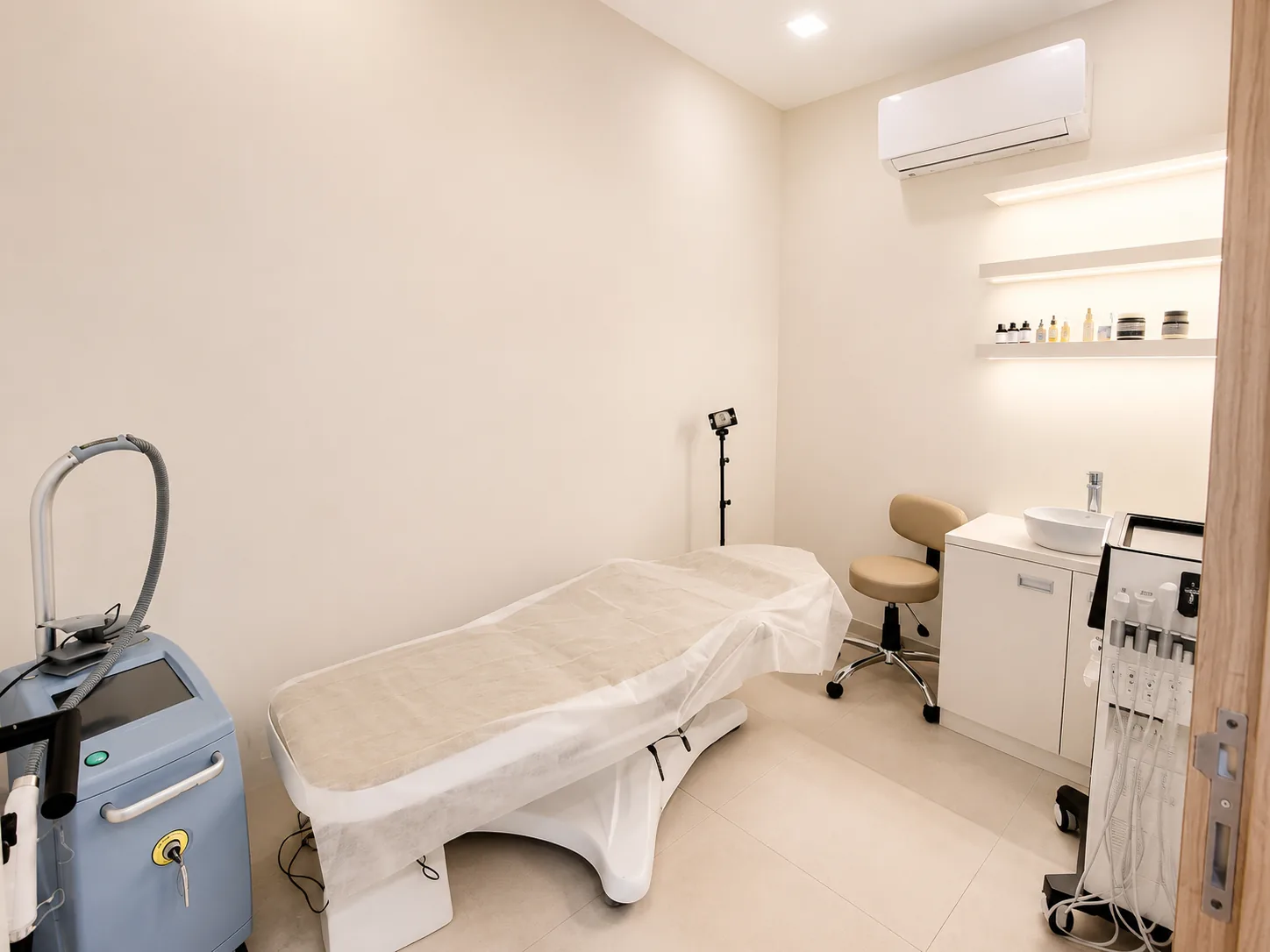
A chemical peel lowers the skin’s pH so the bonds between dead cells dissolve and the top layers shed faster; pigment sitting in those layers sheds with them, and the brightening acids in the peel reduce how much new pigment is made. It works from the surface down and reaches only as deep as its strength allows. A Q-switched laser does something different: a pulse lasting billionths of a second is absorbed by melanin specifically, shattering pigment granules into fragments the body clears, while the surrounding skin is barely heated. It works on pigment wherever the light reaches, including below the surface, and leaves the skin’s structure alone.
Q-switched laser — how a pulse shatters pigment without burning the skin →
Peel or laser, by kind of pigmentation
| Pigmentation | Where it sits | Peel | Laser | What we usually do |
|---|---|---|---|---|
| Sun tan | Epidermis, diffuse | Excellent — detan peels, 2–3 sessions | Works, but more than the problem needs | Peel course plus sunscreen |
| Post-acne marks (PIH) | Epidermis, sometimes deeper | Good — acne-marks peels, 4–6 sessions | Good for stubborn or deeper marks | Peel first; laser if marks persist |
| Sun spots and freckles | Epidermis, discrete | Partial | Excellent — discrete spots respond fast | Laser, with a brightener at home |
| Melasma, epidermal | Epidermis, patchy, hormonal | Good, cautiously — brightening peels in a course | Useful at low energy in a series; risky if pushed | Peels and tranexamic acid first; laser as toning |
| Melasma, dermal or mixed | Dermis | Poor — cannot reach it | Partial — low-energy toning over many sessions | Long plan: sunscreen, oral and topical tranexamic acid, laser toning, no promises |
| Neck, back, body tan | Epidermis, thick skin | Excellent — body-strength peels | Possible, slow over large areas | Peel, often after microdermabrasion |
| Dark underarms and intimate areas | Epidermis, friction-driven | Good — gentle brightening peels | Possible, cautious | Peel plus friction and shaving advice |
Why Indian skin changes the answer
Darker skin has more active melanocytes, and they respond to any insult — heat, acid, friction, sun — by making pigment. That is the whole problem with pigmentation treatment on Indian skin: the treatment itself can cause it. A peel that is too strong, or a laser that is too hot, trades one patch for another, and sometimes a worse one. Our treatment-planning rules exist for exactly this: clients with more than two hours of daily sun exposure are excluded from the Q-switched laser and from medium or deep peels; freshly tanned skin is never treated; retinol in the past 24 hours blocks exfoliation; the laser is never used as a standalone on active acne. The conservative choice usually wins, and the laser is run at lower energy over more sessions than clinics in lighter-skinned markets would.
Our safety rules — the exclusions written for pigment-prone skin →
Sessions, cost and timeline
| Chemical peel course | Q-switched laser course | |
|---|---|---|
| Sessions | 4–8 | 4–8 toning sessions |
| Spacing | 2–4 weeks | 2–4 weeks |
| Downtime | Flaking for 2–5 days with stronger peels | Pink for hours; occasionally a day of darkening before clearing |
| Price per session | ₹2,500 face; ₹3,500 body | Quoted after assessment; carbon facial at ₹4,000 uses the same laser |
| First change | After 1–2 sessions | After 2–3 sessions |
| Sun sensitivity afterwards | Significant for several days | Moderate for several days |
Melasma deserves its own paragraph
Melasma is hormonal, vascular and sun-driven, and neither a peel nor a laser treats the driver. Both can clear pigment; both can make melasma rebound if used aggressively, the laser especially. Our melasma plans put the foundation first — a tinted mineral sunscreen that blocks visible light as well as ultraviolet, tranexamic acid topically and, where the doctor prescribes it, orally, and cycled hydroquinone for resistant patches — and use peels or low-energy laser toning on top of that foundation, never instead of it. A client who leaves with a laser course and no sunscreen plan has not been treated for melasma.
Tranexamic acid — the melasma active that addresses the driver →
Mineral sunscreen — why visible-light protection decides the melasma result →
When the answer is both
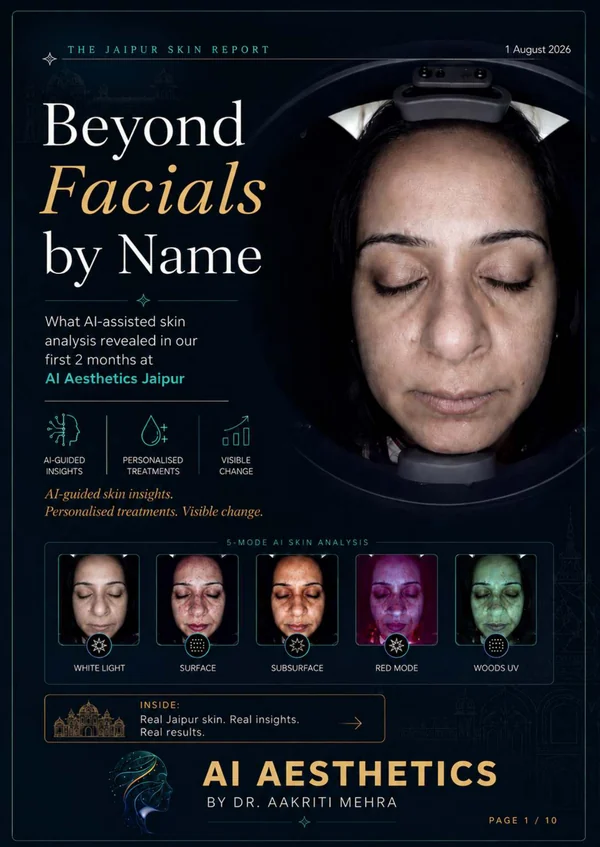
Most pigmentation plans here use both in sequence: peels to clear the surface and prime the skin, then laser toning for what remains below. The carbon facial is the everyday example — a mild exfoliating step, carbon lotion, and the Q-switched laser pass in one session for tan, pores and oil. What the plan never does is run both on the same day at corrective strength, or start either before the AI skin analysis has mapped the depth of the pigment, because that map is the actual answer to “peel or laser”.
AI Skin Analysis — the pigmentation mapping that decides the tool →
Chemical peel vs laser for pigmentation: frequently asked questions
Is laser or chemical peel better for pigmentation?
It depends on the pigment. Peels clear diffuse surface pigment — tan, post-acne marks, body tan — cost-effectively. The Q-switched laser clears discrete spots and deeper pigment that peels cannot reach. Most plans use both in sequence after a skin analysis maps the depth.
Which is better for melasma, peel or laser?
Neither alone. Melasma needs sunscreen that blocks visible light, tranexamic acid and sometimes cycled hydroquinone as the foundation; peels or low-energy laser toning are added on top. Aggressive laser can make melasma rebound.
Is laser safe for pigmentation on Indian skin?
Yes when run at lower energy over more sessions, with sun exposure controlled. Our rules exclude clients with more than two hours of daily sun from the laser and never treat freshly tanned skin.
How many sessions of each are needed?
Four to eight for either, two to four weeks apart. Peels show change after one or two sessions; the laser after two or three.
Which is cheaper for pigmentation?
A peel course, at ₹2,500 per face session. The laser is quoted after assessment; the ₹4,000 carbon facial uses the same laser for tan and pores.
Can a peel or laser make pigmentation worse?
Yes, on pigment-prone skin, if too strong, too hot, or used on sun-exposed skin. That risk is why the skin analysis and exclusion rules come before the choice of tool.