Hydroquinone: The Most Effective Pigment Reducer, Used the Careful Way
Hydroquinone is the drug every pigmentation client in Jaipur has heard of, usually from a chemist, a relative or a tube bought without a prescription. It is genuinely the most effective topical pigment reducer we have, and it is also the one that has darkened more faces in this city than it has lightened — not because the molecule is bad, but because of how it is sold and used. This page explains how it works, why it is prescription-only, what the real risks are, and the cycled, reviewed way it fits into a melasma plan at AI Aesthetics. If you are using a “fairness” or “whitening” cream from a pharmacy, please read the section on steroid combinations before anything else.
Content verified by Dr. Aakriti Mehra
4.9 · 30 Google reviews


What hydroquinone is
Hydroquinone is benzene-1,4-diol — a benzene ring with two hydroxyl groups on opposite sides, a small molecule of about 110 grams per mole that oxidises easily. That ease of oxidation is both its mechanism and its weakness: it browns in the tube when exposed to air and light, and it oxidises inside the skin to compounds that do the pigment-blocking work. It was originally a photographic developer; its skin-lightening effect was noticed in factory workers in the 1930s, and it became the reference depigmenting drug by the 1960s. Every newer brightener — kojic acid, arbutin, tranexamic acid — is measured against it.
At a glance
| Property | Detail |
|---|---|
| Chemical name | Benzene-1,4-diol (quinol) |
| Molecular formula | C6H6O2 |
| Molecular mass | ≈ 110 g/mol |
| Mechanism | Competitive inhibition of tyrosinase; at higher doses, direct toxicity to melanocytes |
| Legal status in India | Prescription drug; not permitted in cosmetics |
| Typical strengths | 2% (mild) to 4% (standard prescription); higher only under specialist care |
| Duration | Cycles of 3–4 months, then a break — never continuous |
| In pregnancy | Avoided — significant absorption through skin |
| Where we use it | Supervised home phase for melasma and resistant pigmentation, with sunscreen and review |
How it reduces pigment
Melanin is built inside melanocytes by a chain of enzymes, the first and rate-limiting one being tyrosinase, which converts the amino acid tyrosine into the precursor of all melanin. Hydroquinone resembles tyrosine closely enough to sit in the enzyme’s active site and block it — competitive inhibition. With tyrosinase occupied, melanin production falls and, as the pigmented cells of the epidermis are shed over the following weeks, the patch lightens. At higher concentrations and with longer use, hydroquinone’s oxidation products also damage melanosomes, the packages melanin is stored in, and are directly toxic to melanocytes. That second effect is where the power and the danger both come from: it can clear pigment that nothing else shifts, and it can leave a pale halo where too much has been used.
Two facts follow. First, hydroquinone only works where melanin is being made — it fades epidermal pigment well and dermal pigment poorly, which is why melasma with a deep component responds partially. Second, it does nothing to the cause: stop it, go back into the Jaipur sun without protection, and the tyrosinase it was blocking starts up again. It is a brake, not a cure.
Why it is prescription-only, and why that is right
Hydroquinone is banned from cosmetics in the European Union, Japan and Australia, was moved to prescription-only in the United States, and in India is a scheduled drug that may only be dispensed against a prescription. The reasons are not that the molecule is dangerous when used correctly; they are the three things that happen when it is used without supervision:
- Exogenous ochronosis: a paradoxical, blue-black, speckled darkening of the treated skin that develops with prolonged, high-strength or unsupervised use, especially on darker skin in strong sun. It is difficult to reverse and is the reason a doctor sets a stop date before you start.
- Halo hypopigmentation: a pale ring where cream has spread beyond the patch, or a patch lightened past the surrounding skin — the result of applying it broadly rather than precisely.
- Irritation and rebound: hydroquinone irritates, irritation in darker skin makes pigment, and a client who then stops abruptly without sun protection often ends up darker than before.
The steroid-combination creams sold over the counter
The single most damaging thing we see in Jaipur pigmentation consultations is a triple-combination cream — hydroquinone, a retinoid and a potent steroid — bought over the counter and used for months or years as a fairness cream. The combination itself is a legitimate prescription for melasma, written for a defined course of weeks with review. Used indefinitely, the steroid thins the skin, makes it red and reactive, grows fine hair, and creates a dependency in which stopping produces a flare that looks like the original problem returning. We see faces that have been on such creams for five years. Treatment then begins with months of steroid withdrawal and barrier repair before any pigmentation work is possible. If you are using one, do not stop abruptly — bring the tube to a consultation and we will plan the taper.
Barrier repair — the first step for skin damaged by steroid creams →
How AI Aesthetics uses hydroquinone
Our treatment engine never selects hydroquinone as an in-clinic step; it is a home-phase drug under the doctor’s prescription, and it is used only when the pigmentation diagnosis justifies it — melasma, resistant post-inflammatory pigmentation or stubborn dark patches that the gentler brighteners have not shifted. The protocol is deliberately boring:
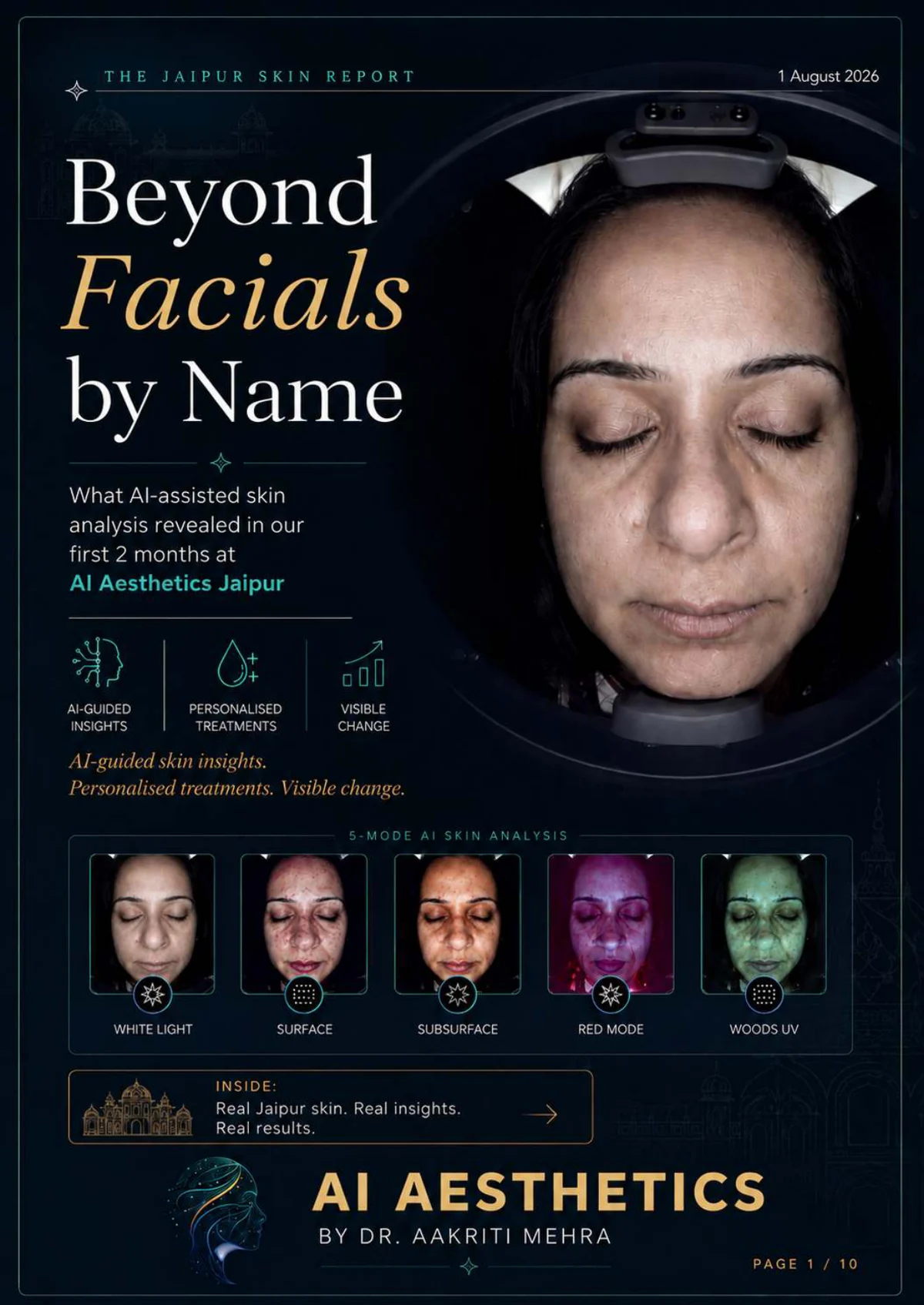
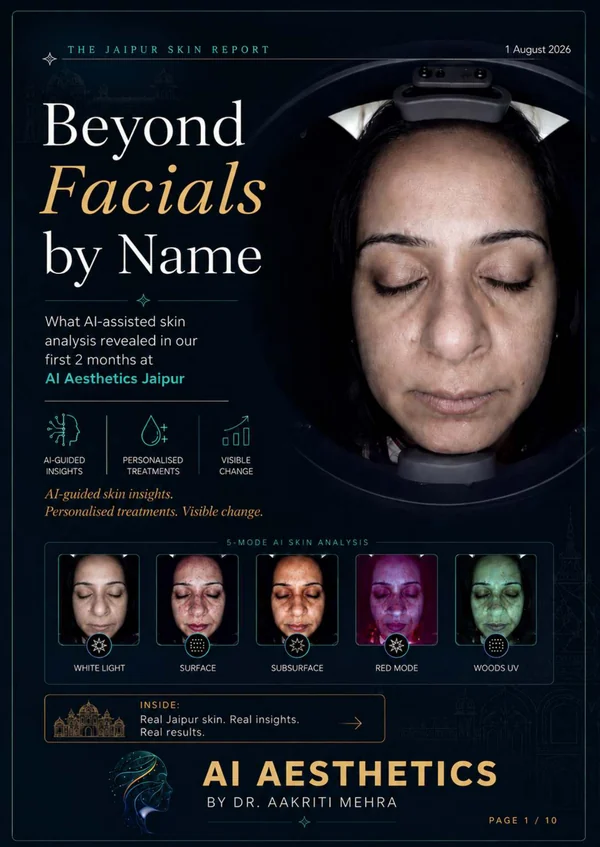
- A diagnosis first: the AI skin analysis and the doctor’s examination separate epidermal from dermal pigment, because hydroquinone is wasted on the latter
- A defined strength — usually 2% or 4%, often combined with a glycolic acid to improve penetration — applied to the patch only, with a cotton bud, at night
- A fixed cycle of twelve to sixteen weeks, followed by a break of at least as long on a maintenance brightener such as tranexamic acid, kojic acid or arbutin
- Sunscreen every morning as a condition of the prescription, not a suggestion; without it, the drug is pointless
- Review at four to six weeks for irritation, halo and early ochronosis signs, and an immediate stop if any appear
- In-clinic correction alongside it — the Q-switched laser or a brightening peel — so that the drug does the blocking and the devices do the clearing
Q-switched laser — the in-clinic partner for stubborn pigment →
Tranexamic acid — the maintenance brightener between hydroquinone cycles →
Hydroquinone versus the gentler brighteners
| Active | Strength of effect | Safe for long-term use | Notes |
|---|---|---|---|
| Hydroquinone | Highest | No — cycled only | Prescription; precise application; sunscreen mandatory |
| Arbutin | Moderate | Yes | A sugar-bound hydroquinone that releases it slowly — the safer cousin |
| Kojic acid | Moderate | Yes, with breaks if irritating | Chelates copper in tyrosinase; can sensitise |
| Tranexamic acid | Moderate for melasma | Yes | Works on the vascular and hormonal side; our melasma maintenance default |
| Azelaic acid | Mild to moderate | Yes, including pregnancy | Also calms acne and redness |
| Niacinamide | Mild | Yes | Blocks pigment transfer; supports everything else |
Hydroquinone and Jaipur conditions
- Sun: a hydroquinone cycle started in April without serious sun protection ends in ochronosis or rebound. We prefer to begin cycles in the cooler months and insist on sunscreen and physical cover regardless.
- Heat and the tube: the drug oxidises faster in a hot bathroom. A cream that has turned brown has lost potency and gained irritants — discard it.
- Hard water and dryness make the skin more irritable; a ceramide moisturiser over the treated patch reduces the irritation that otherwise undoes the benefit.
- Weddings: hydroquinone is not a quick fix for a function in six weeks. It needs a full cycle, and it needs the sun to be managed afterwards.
- Pharmacy culture: in this city it is easy to buy. Please do not. The cost of a consultation is a fraction of the cost of reversing ochronosis.
Who should not use hydroquinone
- Pregnant or breastfeeding clients — absorption through skin is substantial, and gentler brighteners exist
- Anyone who cannot commit to daily sunscreen
- Skin with a compromised barrier, active eczema or steroid damage, until repaired
- Clients with a history of ochronosis or paradoxical darkening from previous use
- Children and adolescents
- Dermal pigmentation, where it will not work and only adds risk
- Use beyond the prescribed cycle, or over the whole face “for fairness” — this is not a fairness cream and we do not prescribe it as one
What to expect
Mild tingling or dryness in the first week; lightening of the treated patch from about four weeks, with the main result at eight to twelve. The patch fades; the surrounding skin should not change, and if it does, you stop. After the cycle, a maintenance brightener and sunscreen hold the gain; a second cycle is considered only after a full break and review. Used this way, hydroquinone remains the most effective tool for melasma and resistant pigmentation. Used any other way, it is the problem we treat. Results vary from person to person.
Where we use Hydroquinone at AI Aesthetics
The treatments at our C-Scheme clinic that actually include it — each page explains the full protocol, suitability and price.
Hydroquinone: frequently asked questions
What is hydroquinone and how does it lighten skin?
A small phenolic molecule that mimics tyrosine and blocks tyrosinase, the enzyme that starts melanin production. With production reduced, pigmented cells are shed over weeks and the patch lightens. At higher doses it also damages the melanin-making cells directly.
Is hydroquinone banned in India?
It is a prescription-only drug, not permitted in cosmetics. It is legal when prescribed by a doctor for a defined course; buying it over the counter as a fairness cream is where the harm comes from.
What is ochronosis?
A paradoxical blue-black, speckled darkening of skin treated with hydroquinone for too long, at too high a strength or in strong sun without protection. It is hard to reverse, which is why we set a stop date and review before and during the cycle.
Does AI Aesthetics prescribe hydroquinone?
Yes, for melasma and resistant pigmentation after diagnosis, as a home-phase drug alongside in-clinic treatment: 2–4%, applied to the patch only, for a 12–16 week cycle, with sunscreen mandatory and a review at 4–6 weeks.
How long can hydroquinone be used?
A cycle of three to four months, then a break of at least as long on a gentler brightener. It is never used continuously or indefinitely.
Can I use hydroquinone in pregnancy?
No. A substantial fraction is absorbed through the skin. Azelaic acid and other gentler brighteners are used instead.
I have been using a fairness cream with hydroquinone and a steroid for years. What should I do?
Do not stop abruptly — the steroid rebound can be severe. Bring the tube to a consultation; we plan a taper, repair the barrier, and only then treat the pigmentation.
Hydroquinone or tranexamic acid for melasma?
Hydroquinone is stronger for clearing a patch over a cycle; tranexamic acid is safer for long-term control of melasma’s vascular and hormonal drivers. Our plans typically use hydroquinone in cycles and tranexamic acid for maintenance between them.
Why did my skin get darker after stopping hydroquinone?
Rebound: the tyrosinase it was blocking restarts, and without sun protection or a maintenance brightener the pigment returns, sometimes worse because of irritation. A planned taper, sunscreen and a maintenance active prevent it.
Does hydroquinone work on all pigmentation?
It works on epidermal pigment — melasma’s surface component, post-acne marks, sun spots. Dermal pigment, deep in the skin, does not respond, which is why diagnosis comes before the prescription.