Monsoon Acne in Jaipur: Why Breakouts Peak in July, and the Clinic Plan That Works Through the Season
Every July, acne consultations at our C-Scheme clinic roughly double. The clients are not new to acne — most have skin that behaves through the dry months and breaks out the week the humidity arrives. Monsoon acne in Jaipur is a predictable, seasonal event with a mechanism, and because it is predictable it can be planned for. This guide explains why humidity does it, how to tell ordinary acne from the fungal kind that mimics it, what to change at home, and the clinic plan we run from June to October.
Content verified by Dr. Aakriti Mehra · Last reviewed October 2026 Editorial policy
4.9 · 30 Google reviews

Why humidity causes acne
- Sweat and oil: at 80–90% humidity, sweat does not evaporate; it sits on the skin mixed with sebum, and the film traps dead cells in the pore opening.
- Swelling of the follicle: hydrated skin cells swell, narrowing pore openings, so oil that would drain in April is trapped in July.
- Bacteria: warm, wet, oxygen-poor pores are the ideal environment for acne bacteria to multiply; inflammation follows.
- Yeast: the same conditions favour malassezia, the skin yeast behind ‘fungal acne’ — the itchy, uniform small bumps on the forehead, chest and back that antibiotics make worse.
- Helmets, scarves and masks: wet fabric on the forehead and jaw for an hour’s commute is friction plus occlusion plus warmth; the breakout follows the strap line.
- Hard water and heavy products: the moisturiser that suited March is too rich for August, and the mineral film from hard water adds to the occlusion.
Bacterial or fungal? It changes the treatment
| Ordinary (bacterial) acne | Fungal acne (malassezia folliculitis) | |
|---|---|---|
| Looks like | Mixed: blackheads, whiteheads, red pimples, some pustules, varied sizes | Uniform small red bumps and pustules, all the same size |
| Where | Face, especially T-zone, jaw | Forehead, hairline, chest, upper back, shoulders |
| Itch | Not usually | Often itchy |
| Worse with | Oily products, stress, hormones | Sweat, occlusion, oils, antibiotics |
| Responds to | Salicylic acid, benzoyl peroxide, extraction, retinoids | Antifungal washes and creams; salicylic acid helps; oils and most moisturisers worsen it |
| Clinic approach | Acne-directed facial, salicylic peel, LED, clean-up | Diagnosis first; antifungal plan; no extraction until cleared |
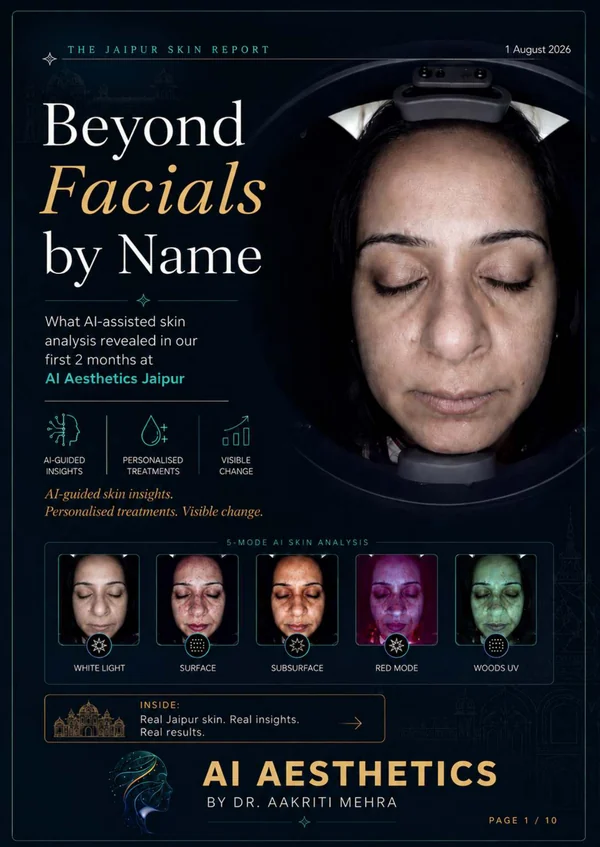
Many monsoon ‘acne’ cases are mixed, and a client treated for months with acne products for a fungal rash is a common July consultation. The AI skin analysis and the doctor’s examination separate the two before anything is applied.
What to change at home from June
- Cleanse twice a day with a gentle gel or a salicylic acid cleanser; rinse with filtered water if the tap water leaves a film
- Switch the moisturiser to a gel or light lotion; do not skip it — dehydrated skin produces more oil
- Sunscreen still, in a gel or fluid mineral formula; the sun between showers is strong
- Salicylic acid 2% at night on breakout-prone zones three or four times a week; benzoyl peroxide 2.5% on inflamed spots
- Niacinamide in the morning for oil regulation
- Wash helmet liners, scarves, pillowcases and towels more often; dry them fully — a damp towel is a yeast culture
- No oils, heavy creams, or thick hair products that migrate to the forehead; no scrubs on inflamed skin
- Shower and change promptly after the commute; sitting in sweat-soaked clothes is the back-acne mechanism
The clinic plan, June to October
| Step | What | How often |
|---|---|---|
| Assessment | AI skin analysis and doctor review: bacterial, fungal or mixed; barrier score; spot-treatment rule applied | Once at the start, repeated each visit |
| Clean-up | Express Clean-Up: cleansing, extraction of comedones, high-frequency sanitation, calming finish | Every 3–4 weeks |
| Corrective | Salicylic acid peel (20% or 30% per the scan), or an acne-directed AI Customized Facial with the salicylic spot step | Every 2–3 weeks |
| Support | Blue then red LED after extraction and peels to reduce bacteria and calm inflammation | Each visit |
| Marks | Once breakouts are controlled, brightening steps for the post-inflammatory marks | From September |
| Medical | Antifungal treatment where indicated; prescription acne treatment from the doctor for inflamed or cystic acne | As prescribed |
Our treatment rules shape this plan: salicylic acid is used as a spot treatment on active lesions, the Q-switched laser is never used as a standalone on active acne, and a face in the barrier-caution band loses its exfoliation that day in favour of calming. The plan treats acne without creating the irritation that becomes next season’s pigmentation.
LED light therapy — blue for bacteria, red for calming →
High-frequency machine — sanitising the skin after extraction →
Back and chest acne in the monsoon
Body acne in Jaipur is a monsoon disease — sweat under a shirt, a backpack strap, a wet helmet strap, a bra band. It is more often fungal than facial acne is, and it leaves marks that last through the wedding season. The plan is the same, scaled: a salicylic or antifungal body wash, prompt showering, cotton clothing, a neck-and-back peel every three to four weeks once inflammation settles, and no scrubbing.
What not to do
- Do not steam, scrub or squeeze; monsoon skin is inflamed and every squeeze is a mark
- Do not buy an over-the-counter steroid cream for ‘pimples’; it clears them for a week and creates steroid acne for months
- Do not stop sunscreen because it is cloudy; the ultraviolet that drives post-acne marks passes through cloud
- Do not change products every week; give a routine four weeks
- Do not start a strong peel or laser the week before a function; the rules will not allow it and the skin would not thank you
Post-acne pigmentation treatment — clearing the marks once the season ends →
Monsoon acne in Jaipur: frequently asked questions
Why does my acne get worse in the monsoon?
Humidity stops sweat evaporating, swells pore openings and traps oil, and warm, wet pores favour both acne bacteria and the malassezia yeast behind fungal acne. Helmets, scarves and heavy products add friction and occlusion.
How do I know if it is fungal acne?
Uniform small, itchy bumps on the forehead, hairline, chest or back that worsen with oils and antibiotics suggest fungal acne; mixed blackheads, whiteheads and pimples of different sizes suggest ordinary acne. The assessment separates them before treatment.
What is the best treatment for monsoon acne in Jaipur?
An assessment-led plan: regular clean-ups with extraction and high-frequency, salicylic acid peels or acne-directed facials every two to three weeks, blue and red LED, antifungal treatment where indicated, and a light, salicylic-based home routine.
Should I skip moisturiser in humid weather?
No. Switch to a gel or light lotion. Skipping moisturiser dehydrates the skin, which responds by producing more oil.
Can I get a peel during the monsoon?
Yes — salicylic peels are the monsoon workhorse. The sun between showers is strong, so the two-day sun rules after a peel still apply.
When should I treat the marks left by monsoon acne?
Once breakouts are controlled, usually from September, with brightening peels and a pigmentation plan, so the marks are gone before the wedding season.