Salicylic Acid: The Oil-Soluble Acid Behind Our Acne and Pore Peels
Every peel acid exfoliates. Only one of the common ones gets inside the pore to do it. Salicylic acid is oil-soluble, which means it travels down into the sebum-filled follicle where blackheads and acne begin, rather than working only on the surface like the water-soluble alpha hydroxy acids. That single property is why it anchors three of our peels, why our treatment engine makes it mandatory wherever an active pimple is visible, and why it needs a different set of cautions from the acids it is often confused with. This page explains all three.
Content verified by Dr. Aakriti Mehra
4.9 · 30 Google reviews

What salicylic acid is
Salicylic acid is a beta hydroxy acid originally isolated from willow bark — the same plant family that gave the world aspirin, which is its acetylated cousin. It is a small aromatic molecule with a benzene ring, and that ring is what makes it dissolve in oil rather than water. Everything that follows comes from that difference: where glycolic and lactic acids spread across the watery surface of the skin, salicylic acid mixes into sebum and follows it down the pore.
At a glance
| Property | Detail |
|---|---|
| Chemical name | 2-hydroxybenzoic acid |
| Molecular formula | C7H6O3 |
| Molecular mass | ≈ 138 g/mol |
| Solubility | Lipophilic — dissolves in oil, poorly in water |
| Related to | Aspirin (acetylsalicylic acid) — shares its salicylate allergy |
| Leave-on strength | 0.5–2% in cleansers and serums |
| Professional peel strength | 20–30%, self-limiting and self-neutralising |
Three actions in one acid
Keratolytic — it loosens the glue
Surface skin cells are held together by a protein-and-lipid cement. Salicylic acid dissolves it, so dead cells that were clinging on are shed, both on the surface and — crucially — along the lining of the pore, where the plug of a blackhead or whitehead forms. This is comedolysis: the pore empties because its wall stops holding on.
Anti-inflammatory — the aspirin inheritance
Like aspirin, salicylic acid damps the prostaglandin pathway that drives redness and swelling. On an inflamed pimple that means a visible calming within a day or two of a spot application, and on reactive, acne-prone skin it means an acid that treats without provoking the way stronger exfoliants can.
Sebum-regulating and mildly antibacterial
By clearing the follicle and reducing the oily environment that acne bacteria thrive in, regular salicylic acid lowers the rate at which new comedones form. It is not an antibiotic, but it makes the skin a worse host.
How we use salicylic acid at AI Aesthetics
| Peel | Composition | Chosen when |
|---|---|---|
| 20% Salicylic Acid Peel | 20% salicylic acid | Blackheads, clogged pores and texture with oiliness — the comedonal picture |
| Salicylic Acid 30% Peel | 30% salicylic acid | Heavier acne and oil burden, when salicylic use is safe |
| Sali DS Peel | Salicylic acid in a deep-penetrating delivery base | Active acne, inflamed hotspots and lesion-directed spot work |
| Combination Peel | 20% salicylic + 20% mandelic acid | Acne and pigmentation together, especially on darker skin |
| Fusion Peel-E | 10% salicylic within a glycolic, lactic and pyruvic blend | Post-acne pigmentation with resurfacing |
| Gel Based Pumpkin Peel | 1% salicylic in a gentle enzyme-and-lactic blend | Glow with light pore support on sensitive skin |
The spot rule
One of the fixed rules in our treatment-planning constraints: if any active acne lesion is visible, a salicylic spot step targeted only at the lesion-bearing zones must be included — even when acne is not the main concern of the session, and unless something specifically contraindicates salicylic use. The engine treats those zones as spot-corrective, avoids the under-eye, lips and broken skin, and does not spread salicylic across the whole face unless the broader acne plan calls for it. A plan with visible active acne and no spot step is, by our own rules, invalid.
The same constraints make salicylic peels compete head to head with the carbon facial for active acne and congestion, and the engine must explain which won and why — rather than defaulting to the gentlest option.
The Q-switched laser and the carbon facial it competes with →
What a salicylic peel is like
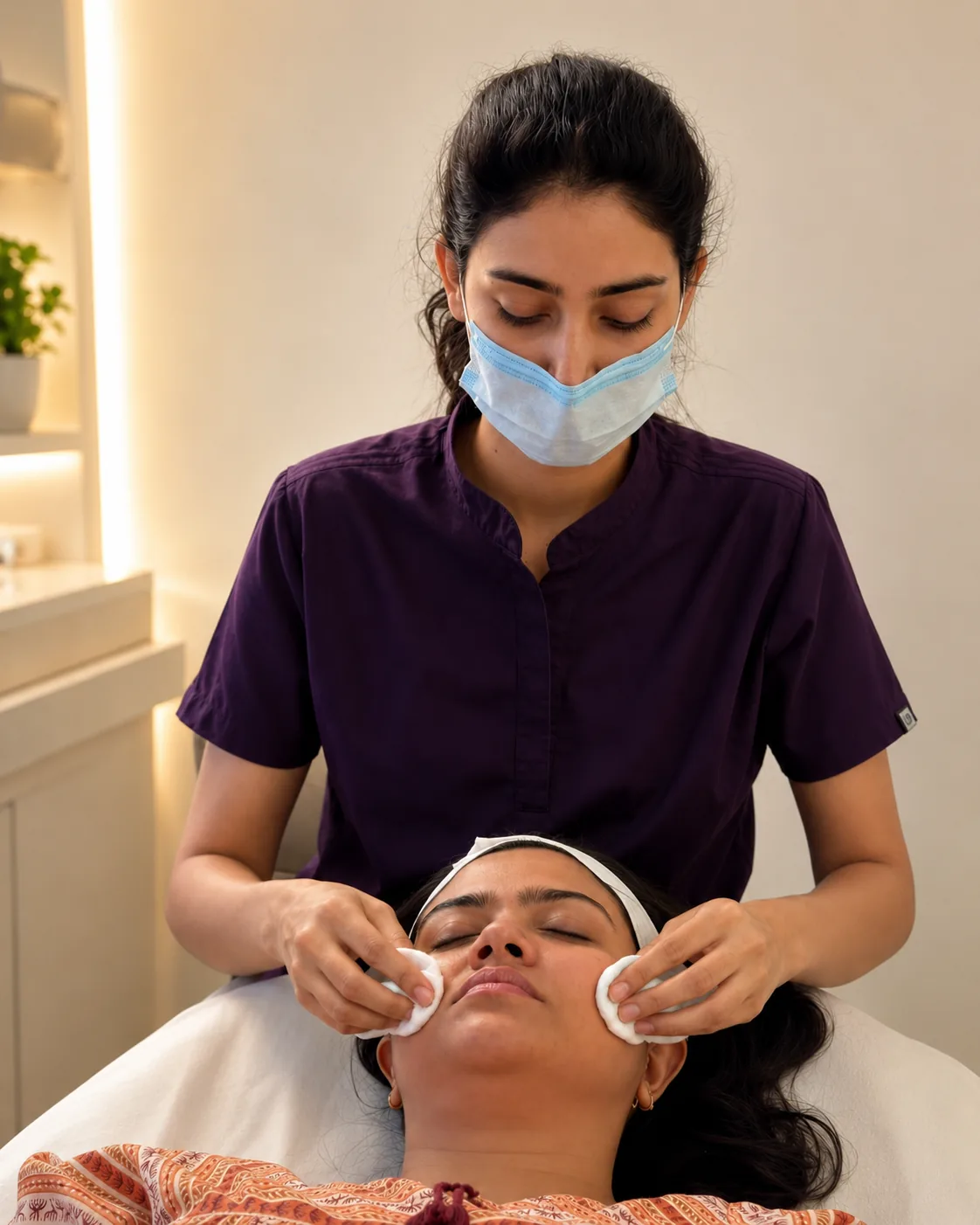
Salicylic acid is applied to cleansed, degreased skin and left for a few minutes. It tingles, sometimes stings briefly, and often produces a white frost — not a burn, but the acid crystallising as its solvent evaporates, which also means the peel is self-limiting: once it crystallises, it stops penetrating. It is wiped away rather than chemically neutralised. Afterwards the skin is mildly pink and tight for a few hours, with light flaking over two to four days and visibly clearer pores within a week. Active lesions calm within days; the comedonal picture improves across a monthly series.
Salicylic acid and Jaipur skin
- Monsoon is acne season. Humidity, sweat and heavy sunscreen clog pores from July to September; salicylic peels and a 2% leave-on serum are the first-line response.
- The summer film: perspiration plus SPF plus dust forms a layer that ordinary cleansing leaves behind. A salicylic step dissolves it from inside the pore, which is why the Express Clean-Up leans on it.
- Our peel rules apply: if you used a salicylic or glycolic product the previous day, the engine will not schedule a deep peel or the Q-switched laser that session, and retinol within 24 hours blocks medium peels and aggressive exfoliation.
- Dry winters: salicylic acid is drying; in December and January we pair it with niacinamide and a barrier moisturiser, and the engine prefers the 20% over the 30%.
- Beard and razor zones in men respond well to low-strength salicylic in a post-shave serum, reducing ingrown hairs and bumps.
Who should not have salicylic acid
- Aspirin or salicylate allergy — the same molecule family; this is the first question we ask before any salicylic peel
- Pregnancy and breastfeeding — professional-strength peels are avoided; our constraints permit only the Party Peel and Pumpkin Peel in pregnancy, and the Pumpkin Peel’s 1% salicylic is the ceiling
- Isotretinoin in the past six months, or a very thin, over-exfoliated barrier
- Active cold sores, open wounds or infected skin
- Clients on blood thinners — our constraints limit them to gentle exfoliation only, which rules out the 30% peel
- Large body-area peels in children or anyone with kidney impairment, where absorbed salicylate can accumulate — not a concern for facial use
What to expect
Fewer blackheads and a smoother, less shiny surface within a week of a peel; active spots calmer within days; a sustained reduction in new breakouts across a monthly series combined with a leave-on salicylic or niacinamide routine. Post-acne marks fade as the acne stops feeding them, often with a pigment-directed peel added. Salicylic acid will not remove pitted scars or treat hormonal acne on its own, and it is drying when overused — the plan sets the dose. Results vary from person to person.
Acne marks treatment — the next step after the acne is controlled →
Where we use Salicylic Acid at AI Aesthetics
The treatments at our C-Scheme clinic that actually include it — each page explains the full protocol, suitability and price.
Salicylic acid: frequently asked questions
What is salicylic acid and how is it different from glycolic acid?
Salicylic is a beta hydroxy acid that dissolves in oil, so it penetrates into pores and clears them from inside; glycolic is a water-soluble alpha hydroxy acid that resurfaces the skin surface. Salicylic is for acne, blackheads and oil; glycolic for texture, tone and surface renewal.
How does a salicylic acid peel help acne?
It dissolves the cement holding dead cells in the pore lining so comedones empty, calms inflammation through the same pathway as aspirin, and reduces the oily environment acne bacteria need. Active spots settle within days; congestion improves over a series.
Which salicylic peels does AI Aesthetics offer?
A 20% Salicylic Acid Peel for blackheads and congestion, a 30% peel for heavier acne and oil, the Sali DS Peel for active and inflamed acne including spot treatment, plus salicylic within the Combination, Fusion and Pumpkin peels.
What is the spot rule?
A fixed rule in our treatment constraints: if any active acne lesion is visible, a salicylic spot step targeted at those zones must be included in the session unless contraindicated — even when acne is not the main concern.
Can I have a salicylic peel if I am allergic to aspirin?
No. Aspirin is acetylsalicylic acid and shares the salicylate allergy. Tell us about any aspirin or salicylate reaction before booking; we will choose a different acne-directed peel.
Is salicylic acid safe in pregnancy?
Low-strength leave-on products are widely considered acceptable, but professional-strength peels are avoided. In pregnancy our constraints permit only the Party Peel and the Pumpkin Peel, whose 1% salicylic is the ceiling.
Does a salicylic peel hurt or cause peeling?
It tingles and may sting briefly, and a white frost that appears is the acid crystallising, not a burn. Expect mild pinkness for a few hours and light flaking for two to four days.
Why can’t I have a deep peel the day after using salicylic acid at home?
Our constraints block deep peels and the Q-switched laser if salicylic or glycolic acid was used the previous day — the skin is already sensitised, and stacking more exfoliation on it risks irritation and darkening.
How often can I have a salicylic acid peel?
Typically every three to four weeks in a series, adjusted to how your skin recovers and to the season — the engine prefers the 20% strength in dry winter months.
Does salicylic acid help acne scars?
It treats active acne and shallow post-acne marks by stopping new lesions and speeding turnover. Pitted scars need RF microneedling or resurfacing, which salicylic acid does not provide.