Ceramides: The Lipid Mortar of the Skin Barrier and How We Rebuild It
Most of the actives on this site do something to your skin. Ceramides are different: they are your skin. Roughly half of the lipid “mortar” that holds the outermost layer together is ceramide, and when that mortar thins — after a peel, a laser, a dry Jaipur December, a month of hard-water washing — the skin leaks water, lets irritants in and starts to sting at products it tolerated last week. Rebuilding that mortar is the job we give ceramides, and it is why they turn up in the moisturiser at the end of almost every session here. This page explains what ceramides actually are, how the barrier is built, why the classic ratio with cholesterol and fatty acids matters, and where the treatment engine leans on them.
Content verified by Dr. Aakriti Mehra
4.9 · 30 Google reviews




What a ceramide is
Chemically, a ceramide is a sphingoid base — usually sphingosine or phytosphingosine, an 18-carbon amino alcohol — joined by an amide bond to a fatty acid that can be anywhere from 16 to over 30 carbons long. That gives the molecule two long, waxy tails and a small polar head, so it packs tightly with its neighbours into flat, ordered sheets. Human skin makes at least twelve families of them, named by their head group and fatty acid: ceramide NP (non-hydroxy fatty acid on phytosphingosine), ceramide AP (alpha-hydroxy on phytosphingosine), ceramide NS, AS, and the unusual EOP and EOS families, whose extra-long acyl chains carry a linoleic acid on the end and act as molecular rivets that pin lipid layers together. Those names are what the small print on a good moisturiser means by “ceramide NP, AP, EOP”.
At a glance
| Property | Detail |
|---|---|
| Class | Sphingolipid — a sphingoid base amide-linked to a fatty acid |
| Share of barrier lipids | ≈ 50% by mass, with cholesterol ≈ 25% and free fatty acids ≈ 10–15% |
| Families in human skin | 12 or more (NP, AP, NS, AS, EOP, EOS and others) |
| Made where | Lamellar bodies in the granular layer, from glucosylceramides and sphingomyelin |
| In pregnancy | Safe — a structural lipid, not a drug |
| Sun sensitivity | None |
| Where we use it | Finishing moisturisers, barrier-repair protocols, post-laser and post-peel care |
Bricks, mortar and why the ratio matters
The stratum corneum is often described as a brick wall: flattened dead cells (corneocytes) are the bricks, and the lipid matrix between them is the mortar. The mortar is not a random grease. Cells in the granular layer package ceramide precursors, cholesterol and fatty acids into tiny lamellar bodies, then extrude them into the space between the cells, where enzymes convert the precursors into finished ceramides. These three lipids then self-assemble into stacked bilayers — alternating sheets of lipid and water — that are nearly impermeable. The structure only forms properly when all three are present in roughly their natural proportions. This is the origin of the three-to-one-to-one idea in barrier repair: a cream that supplies ceramides, cholesterol and fatty acids together restores barrier function faster than any one of them alone, and a cream that supplies one in large excess can briefly make the barrier worse by disrupting the stack.
A healthy barrier does three things at once: it holds water in (low transepidermal water loss), keeps irritants, allergens and microbes out, and gives the skin its smooth, flexible feel. Every one of those fails when ceramide levels drop.
What depletes ceramides
- Dry, cold air: in low humidity the enzymes that finish ceramides work less well, and the skin cannot keep pace with water loss — the December problem in Jaipur
- Harsh cleansing and hard water: surfactants dissolve barrier lipids directly, and the calcium and magnesium in hard water leave a film that stiffens the remaining mortar
- Chemical peels, retinoids and lasers: anything that accelerates turnover or heats the skin thins the barrier temporarily — intentionally, which is why what comes after matters
- Age: ceramide production falls steadily from the thirties, part of why older skin is drier and slower to recover
- Atopic and reactive skin: people with eczema tendencies make less ceramide and a different mix of it, which is why their barrier fails first
- Over-exfoliation: the most common self-inflicted cause we see — a daily acid toner plus a scrub plus a retinol, and a barrier that cannot keep up
Why ceramides go on at the end of nearly every session
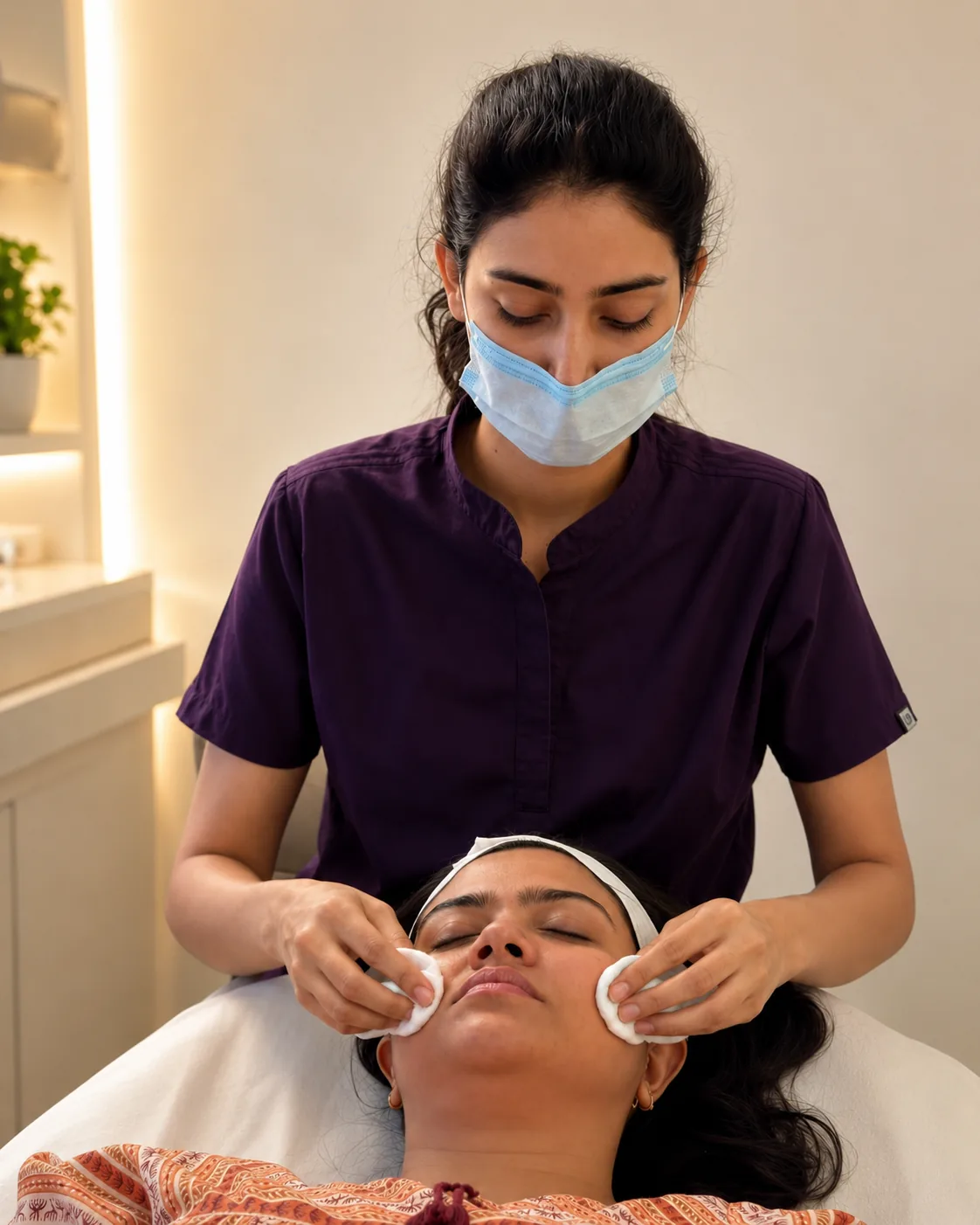
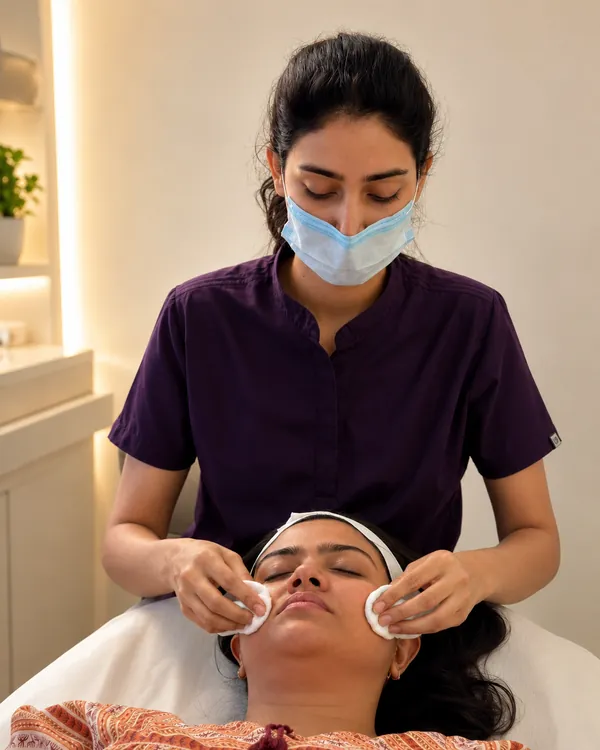
Our treatment-planning constraints end every facial with the same three steps — serum, moisturiser, sunscreen — and the moisturiser the engine selects for most skin types is ceramide-based. The reasoning is mechanical. A corrective step such as a glycolic peel, a diamond microdermabrasion pass or a carbon laser has just thinned the barrier on purpose; the skin will rebuild it over the following days, and supplying the structural lipids directly shortens that window, reduces the stinging and tightness clients feel on day two, and lowers the chance of the post-treatment irritation that in darker skin can turn into pigmentation.
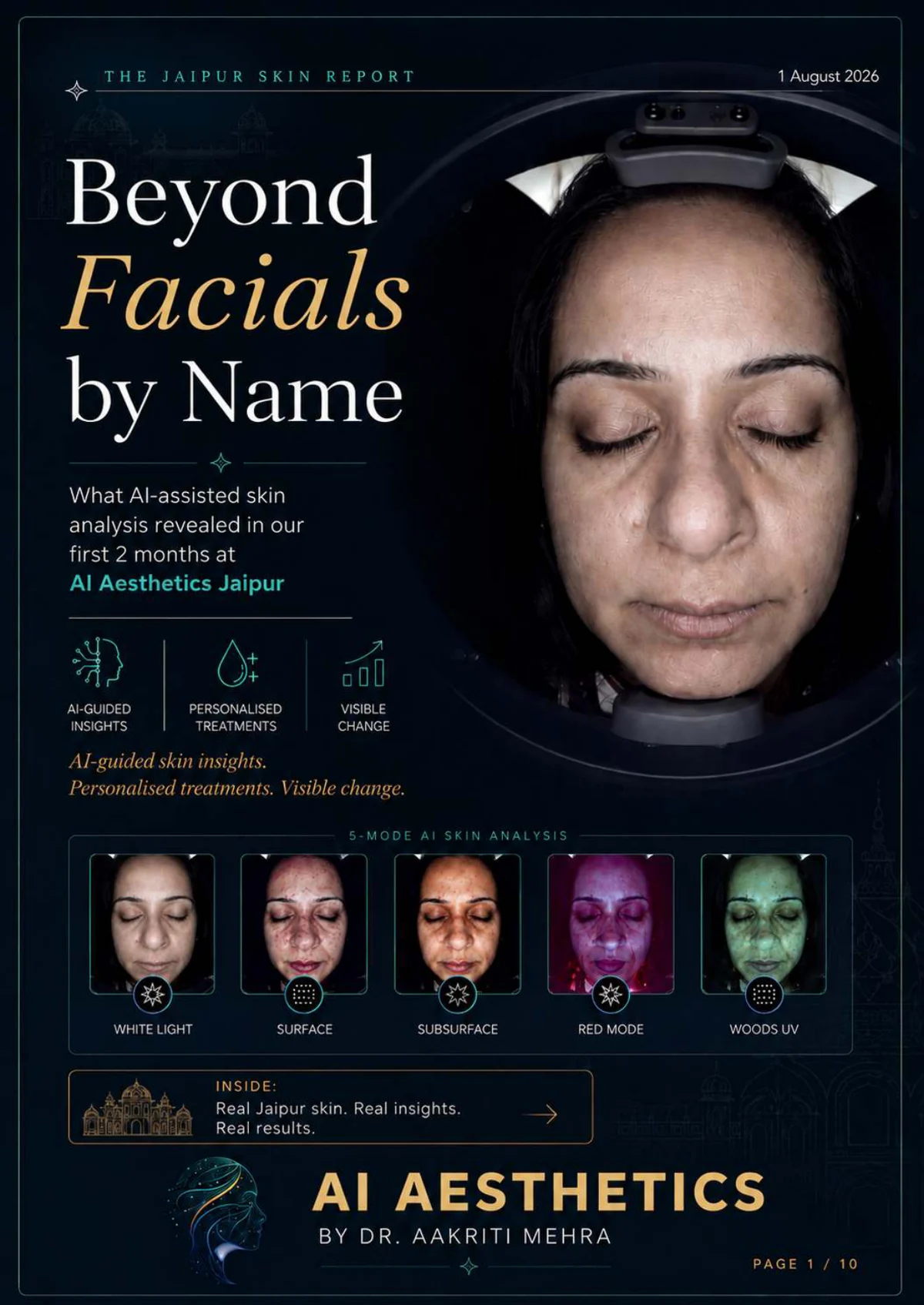
Ceramides also appear earlier in a session when the scan says the barrier is already compromised. The engine reads hydration, redness and flaking scores; a face in the caution band loses its exfoliation and energy-device options for that day and gets a barrier-first protocol — hydradermabrasion with a hyaluronic acid infusion, calming red LED and a ceramide-rich finish — until the barrier is strong enough to tolerate correction. Treating a broken barrier with more actives is how we see clients arrive; rebuilding it first is how we send them home.
Hyaluronic acid — the water to the ceramides’ wax →
Niacinamide — the active that makes the skin produce more of its own ceramides →
Ceramides and niacinamide: the pairing we rely on
Applied ceramides repair the mortar from outside; niacinamide increases the skin’s own ceramide synthesis from inside by stimulating serine palmitoyltransferase, the enzyme at the first step of the sphingolipid pathway. Used together in a finishing serum or a daily moisturiser, they attack the same problem from both ends, which is why the daily serum we recommend for dry and sensitive skin pairs a high dose of niacinamide with ceramides and a humectant. For a Jaipur winter, that combination outperforms heavier, oilier creams that sit on the surface without rebuilding anything.
After lasers and peels
Our constraints keep the week after any laser session to barrier support only — no exfoliation, no heat. The practical content of that week is a ceramide moisturiser applied twice daily, a bland cleanser and sunscreen. On the face after laser hair removal, where the skin is both warmed by the diode and shaved beforehand, a ceramide cream reduces the small bumps and dryness that otherwise follow. After a medium-depth peel the same cream is applied over the peeling days rather than picking or scrubbing. In both cases the rule is the same: let the skin rebuild, and give it the raw materials.
Face laser hair removal — aftercare for the week after a session →
Choosing a ceramide product: what matters and what does not
- Named ceramides (NP, AP, EOP) on the label, ideally more than one family, with cholesterol and a fatty acid alongside
- Concentration is rarely disclosed and does not need to be high; the natural barrier works at fractions of a percent in a well-built formula
- Pseudo-ceramides — synthetic analogues — restore barrier function in studies and are a legitimate, cheaper option
- Fragrance-free, because the clients who most need ceramides are the ones who react to fragrance
- Texture matters more than marketing: a lotion for oily Jaipur summers, a cream for the winter and for anyone over forty
- Ceramides in a cleanser are mostly washed down the drain; they belong in the leave-on step
Ceramides and Jaipur skin
- Winter: from late November, barrier complaints double in our clinic — tightness after washing, stinging from a serum that was fine in October. The fix is a ceramide cream, not a stronger serum.
- Hard water: Jaipur’s borewell and tanker water strips lipids and leaves a mineral film. Rinse with filtered water where possible and replace lipids after every wash.
- Air conditioning: eight hours a day in a dry, cooled office is a slow dehydrator all summer; a ceramide moisturiser under sunscreen offsets it.
- Dust: a strong barrier is also a physical defence against the particulate load on a Jaipur commute; a leaky one lets irritants in and reacts.
- Wedding season: brides who begin a peel series in October without a barrier plan reach December reactive; ceramides every night from the first peel prevent that.
Who benefits most, and who does not need them
Ceramides have no real exclusion list — there is no allergy to the body’s own lipids, they are safe in pregnancy and under sunscreen, and they do not interact with other actives. The honest limitation is at the other end: oily, resilient skin with an intact barrier does not need a ceramide-heavy cream and may find it occlusive and congesting in a Jaipur summer. A light gel moisturiser serves such skin better until a peel or a laser creates a reason to switch. The clients who gain most are those with dry, sensitive, eczema-prone, over-exfoliated or post-procedure skin, and anyone past forty.
What to expect
Relief from tightness within a day; a visible drop in redness and stinging over a week; a barrier that tolerates actives again over two to four weeks of consistent use. Ceramides are not a brightening or anti-ageing treatment in themselves — their effect on fine lines is the modest plumping of a hydrated barrier — but every corrective treatment works better and causes less trouble on skin that has them. Results vary from person to person.
Where we use Ceramides at AI Aesthetics
The treatments at our C-Scheme clinic that actually include it — each page explains the full protocol, suitability and price.
Ceramides: frequently asked questions
What are ceramides?
Waxy lipids — a sphingoid base joined to a long fatty acid — that make up about half of the matrix between the dead cells of the outermost skin layer. Together with cholesterol and fatty acids they form the stacked lipid sheets that keep water in and irritants out.
What do ceramides do for skin?
They rebuild the barrier: reducing water loss, calming stinging and redness, and restoring the smooth, flexible feel of healthy skin. They are a structural repair, not an active that changes pigment or collagen.
Why does AI Aesthetics use ceramides after peels and lasers?
Those treatments thin the barrier on purpose. Supplying ceramides afterwards shortens recovery, reduces the day-two tightness and lowers the risk of post-treatment irritation, which in darker skin can leave pigmentation. Our constraints keep the week after a laser to barrier support only.
Are ceramides good for dry skin in winter?
They are the single most useful change for Jaipur winter skin. Low humidity slows the skin’s own ceramide production; applying them directly restores the barrier faster than any heavier cream that merely sits on top.
Can oily skin use ceramides?
Yes, in a light lotion or gel. Oily skin with an intact barrier does not need a rich ceramide cream and may find it congesting in summer; after a peel or laser, a ceramide product is still the right aftercare.
Ceramides or hyaluronic acid?
Both, in that order of function: hyaluronic acid draws water in, ceramides keep it there. A barrier-repair routine uses a humectant serum under a ceramide moisturiser.
Do ceramides and niacinamide work together?
Very well. Applied ceramides repair the barrier directly and niacinamide stimulates the skin to synthesise more of its own, so the pairing is our default for dry and sensitive skin.
Which ceramides should be on the label?
Named families such as ceramide NP, AP or EOP, ideally more than one, alongside cholesterol and a fatty acid. Synthetic pseudo-ceramides also work. The concentration is rarely stated and does not need to be high.
Are ceramides safe in pregnancy?
Yes. They are the skin’s own structural lipids, not drugs, and they carry no sun sensitivity or interaction with other actives.
Can ceramides treat pigmentation or wrinkles?
Not directly. They support the skin so that pigmentation treatments and collagen-stimulating devices can be used with fewer side effects, and a hydrated barrier softens fine lines modestly, but they are not a corrective in themselves.