Squalane and Panthenol: The Recovery Pair in Post-Treatment Skincare
Read the ingredients of the cream we hand you after a laser session or a peel and two names will be near the top: squalane and panthenol. Neither is glamorous. Squalane is a lipid your own skin already makes, in a form that does not spoil; panthenol is a vitamin precursor that the skin converts and uses to rebuild. Together they are the quiet reason post-treatment skin at AI Aesthetics settles in days rather than weeks. This page explains what each one is, the squalene–squalane distinction that matters for acne-prone Jaipur skin, why panthenol is in burn and wound creams the world over, and exactly where the two appear in our aftercare.
Content verified by Dr. Aakriti Mehra
4.9 · 30 Google reviews

Squalane: the stable version of your own sebum
Human sebum is about an eighth squalene — a thirty-carbon hydrocarbon with six double bonds, a branched chain that spreads easily and keeps the skin surface supple. Those six double bonds are its weakness: in sunlight and air, squalene oxidises within hours into squalene peroxide, a compound that is comedogenic, inflammatory and implicated in the darkening of pigment-prone skin after sun. This is one reason oily skin in Jaipur breaks out and darkens in summer — the sebum itself goes rancid on the face. Squalane is squalene with hydrogen added across every double bond: the same shape, the same skin-feel, and no sites to oxidise. It does not go off in the bottle, on the face or in the sun. Modern squalane is made from sugarcane or olive sources rather than animal ones, and it is the lightest emollient that still seals effectively.
At a glance: squalane
| Property | Detail |
|---|---|
| Chemical name | 2,6,10,15,19,23-hexamethyltetracosane |
| Molecular formula | C30H62 |
| Relation to squalene | Fully hydrogenated — saturated and oxidation-stable |
| Feel | Very light, fast-absorbing, non-greasy |
| Comedogenicity | Very low — suits oily and acne-prone skin, unlike most oils |
| Function | Emollient: fills gaps between cells, reduces water loss, restores suppleness |
| In pregnancy | Safe |
Panthenol: the provitamin that speeds repair
Panthenol is the alcohol form of vitamin B5. Applied to skin it is absorbed and oxidised into pantothenic acid, which the cells use to build coenzyme A — the molecule at the centre of fatty-acid synthesis, including the fatty acids and ceramides the barrier is made of. That is why panthenol is in burn dressings, post-surgical creams and tattoo aftercare: it gives repairing skin the precursor it needs to make lipids, and in doing so measurably increases the rate at which a wound re-epithelialises. It is also a humectant, holding water in the upper layers, and it has a direct anti-itch, anti-irritant effect that is useful on the prickle of freshly lasered or peeled skin. The D-form, dexpanthenol, is the active one; the usual concentration in skincare is between one and five per cent.
At a glance: panthenol
| Property | Detail |
|---|---|
| Chemical name | (R)-2,4-dihydroxy-N-(3-hydroxypropyl)-3,3-dimethylbutanamide |
| Molecular formula | C9H19NO4 |
| Converted to | Pantothenic acid (vitamin B5), then coenzyme A |
| Functions | Humectant; accelerates re-epithelialisation; anti-itch; reduces water loss |
| Typical concentration | 1–5% (dexpanthenol) |
| Evidence | Strong for wound healing and irritant dermatitis; good for barrier recovery |
| In pregnancy | Safe |
Why the two are paired
A barrier under repair needs three things: water held in place, lipid to seal it, and raw materials to rebuild with. Panthenol supplies the first and the third; squalane supplies the second without the heaviness that would trap heat on inflamed skin. Neither stings, neither is comedogenic, neither interacts with any treatment we perform, and neither sensitises to the sun — which is why the pair can go on in the clinic immediately after a laser pass, under sunscreen, and again at home that night. Ceramides, when added, complete the picture by rebuilding the mortar itself; squalane and panthenol are the fast relief that makes the first forty-eight hours comfortable.
Ceramides — the structural lipids that complete barrier repair →
Hyaluronic acid — the deeper humectant used alongside panthenol →
Where they appear in our aftercare
| After | What goes on | Why |
|---|---|---|
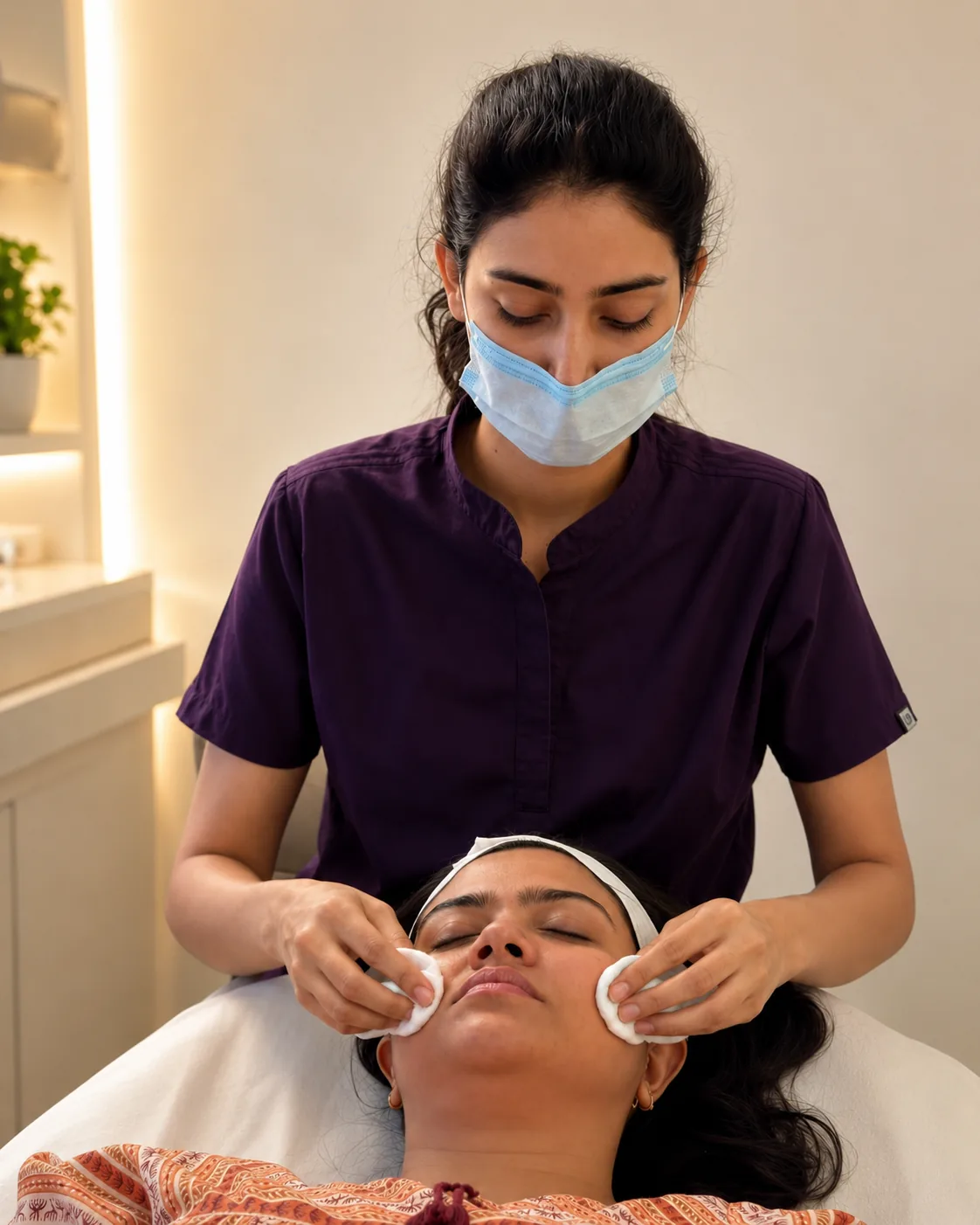
| Diode laser hair removal, face or body | Squalane-and-panthenol soothing cream, then mineral sunscreen | Cools the warmed follicles, prevents the dry bumps that follow shaving plus heat |
| Carbon facial and Q-switched sessions | Panthenol-rich calming gel in clinic; squalane cream at night | Settles the mild redness; no occlusion on a heated surface |
| Chemical peels, over the peeling days | Squalane-based moisturiser, applied rather than picking | Keeps the lifting layer supple so it sheds evenly |
| Barrier-repair and sensitive-skin facials | Both, in the finishing step | Relief from stinging and tightness the same day |
| Scalp after exosome or PRP sessions | Panthenol in the post-procedure scalp serum | Calms the needled scalp and reduces itch |
| Post-travel and sun-stressed skin | Panthenol humectant under a squalane seal | Rehydrates and calms a dehydrated, irritated surface |
Our treatment-planning constraints keep the seven days after any laser to barrier support only — no exfoliation, no heat, no acids. In practice, that week is squalane, panthenol, a gentle cleanser and sunscreen. Clients who follow it rarely need anything else; clients who reach for a scrub on day three are the ones who come back with irritation.
Multi-wavelength diode laser — what the week of aftercare is protecting →
Squalane for oily and acne-prone skin: the counter-intuitive case
Clients with oily skin in Jaipur avoid anything called an oil, understandably. Squalane is the exception worth making. It is lighter than the skin’s own sebum, it does not oxidise into the comedogenic peroxide that sebum becomes in the sun, and a thin layer of a stable lipid can actually reduce the skin’s drive to over-produce its own. For acne-prone skin recovering from a salicylic peel or a carbon facial, a few drops of squalane at night is often better tolerated than any cream. It is not a treatment for acne; it is the moisturiser that does not make acne worse.
Squalane, panthenol and Jaipur conditions
- Summer sebum oxidation: the darkening and breakouts of May and June are partly squalene peroxide; cleansing properly at night and using a stable lipid rather than letting sebum sit is a real, if unglamorous, defence.
- Heat on treated skin: heavy balms trap heat on a freshly lasered face in a hot car; squalane seals without occluding, which is why we prefer it to petrolatum-type products in the warm months.
- Winter: panthenol’s humectant effect needs some ambient moisture to draw on; in a dry December, layer it under squalane or a ceramide cream rather than alone.
- Hard water: a panthenol-containing cleanser or cream reduces the itch and tightness hard-water washing leaves.
- Dust and the commute: a light squalane layer under sunscreen keeps particulate from settling into a compromised barrier.
Who should be cautious
- Both ingredients are among the best tolerated in skincare; true allergy to either is rare but documented, mostly for panthenol in people with multiple cosmetic allergies — patch test if that applies
- Fungal acne (malassezia folliculitis): squalane is generally tolerated, unlike most oils, but any new lipid on a flaring fungal rash should be introduced carefully
- Very oily skin in peak humidity may prefer panthenol in a gel and no lipid at all until the weather turns
- Neither is a corrective: they do not treat pigmentation, acne or ageing, and a routine built only on them will feel comfortable and change nothing
What to expect
Immediate relief from tightness and sting; redness that settles overnight rather than over days; peels that shed evenly instead of in patches; a lasered face that is smooth rather than bumpy by day three. They do their work in the first week after a treatment and then step back, leaving the corrective to show its result. Results vary from person to person, but comfort during recovery is the one outcome we can promise with reasonable confidence.
Where we use Squalane & Panthenol at AI Aesthetics
The treatments at our C-Scheme clinic that actually include it — each page explains the full protocol, suitability and price.
Squalane and panthenol: frequently asked questions
What is the difference between squalene and squalane?
Squalene is a lipid your skin makes, with six double bonds that oxidise within hours in sun and air into a comedogenic, darkening peroxide. Squalane is squalene with hydrogen added across those bonds — the same light feel with nothing left to oxidise. Skincare uses squalane.
Is squalane good for oily or acne-prone skin?
Yes, unusually for an oil. It is lighter than sebum, does not oxidise, has very low comedogenicity and is often the best-tolerated moisturiser after a salicylic peel or carbon facial.
What does panthenol do for skin?
It is converted to vitamin B5 and then coenzyme A, which the skin uses to make barrier lipids. It speeds re-epithelialisation, holds water in the upper layers, and reduces itch and irritation — the reason it is in burn and wound creams.
Why does AI Aesthetics use squalane and panthenol after lasers?
Our constraints limit the week after a laser to barrier support. Squalane seals without trapping heat, panthenol speeds repair and calms the prickle, and neither stings, sensitises to sun or interacts with the treatment.
Can I use them in pregnancy?
Yes. Both are safe in pregnancy and breastfeeding, and they are the basis of the gentle aftercare we use for pregnant clients’ facials.
Should I use squalane or a ceramide cream?
Both have a role: squalane is fast relief that seals and soothes, ceramides rebuild the barrier’s structure. After a treatment we often use squalane and panthenol first, with ceramides in the daily moisturiser.
Does panthenol help after chemical peels?
Yes. Applied over the peeling days it keeps the lifting layer supple so it sheds evenly, reduces itching, and speeds the renewal underneath. Do not pick; apply.
Can squalane be used under sunscreen in summer?
Yes — a thin layer absorbs quickly and does not pill under a mineral sunscreen. Heavy balms are the ones that feel wrong in Jaipur heat.
Do these ingredients treat pigmentation or acne?
No. They are recovery and barrier ingredients. They make corrective treatments more comfortable and reduce irritation-driven pigmentation, but they do not clear pigment or acne themselves.
Is panthenol used on the scalp?
Yes. Panthenol is in the post-procedure scalp serum after exosome and PRP sessions to calm the needled scalp and reduce itch.