Pumpkin Enzymes: Exfoliation Without Acid, and Why It Is Our Gentlest Peel
Every other peel on this site works by lowering the pH of the skin until the glue between dead cells gives way. The pumpkin peel works by eating the glue. Its active ingredients are enzymes — proteins that cut other proteins — and because they work at the skin’s own pH, they exfoliate without the sting, the sun sensitivity or the pigmentation risk that acids carry on darker skin. That is why the gel-based pumpkin peel is one of only two peels our treatment-planning constraints permit in pregnancy, and why it is the one we reach for when a face is too reactive for anything else. This page explains how enzymatic exfoliation works, what else pumpkin brings, and where it genuinely belongs in a Jaipur skin plan.
Content verified by Dr. Aakriti Mehra
4.9 · 30 Google reviews


How an enzyme exfoliates
The outermost skin layer is held together by corneodesmosomes — protein rivets between the flattened dead cells. The skin dissolves them on its own schedule with its own enzymes; dull, rough, flaky skin is skin where that schedule has slowed. Proteolytic enzymes from plants do the same job from outside. Pumpkin flesh is rich in them, alongside a protease similar in action to the better-known papaya and pineapple enzymes. Applied in a gel and left for a few minutes, the enzymes cut the protein rivets, the dead cells lift, and the living layer beneath is left untouched — enzymes cannot digest intact, living tissue with a functioning barrier. The process stops when the gel is removed, which makes it self-limiting in a way an acid is not.
At a glance
| Property | Detail |
|---|---|
| Active principle | Proteolytic enzymes plus mild natural fruit acids |
| Working pH | Near neutral — no acid burn, no neutraliser needed |
| Also contains | Beta-carotene (vitamin A precursor), vitamin C, zinc, antioxidant carotenoids |
| Depth | Very superficial — dead surface cells only |
| Downtime | None; mild pinkness for an hour at most |
| Sun sensitivity afterwards | Minimal |
| In pregnancy | Permitted under our constraints, with the Party Peel |
| Where we use it | Reactive, dull or dehydrated skin; pregnancy facials; first-timers; the week before an event |
What pumpkin brings besides enzymes
- Beta-carotene and related carotenoids — the orange pigments — are antioxidants and the dietary precursor of vitamin A; in a peel they contribute a brightening, conditioning effect rather than retinoid activity
- Vitamin C in modest amounts supports the brightening and antioxidant effect
- Zinc, mildly anti-inflammatory and sebum-regulating, which is why the peel suits oily but sensitive skin
- A small fraction of natural fruit acids that nudge exfoliation without dropping the pH to acid-peel levels
- A gel base that hydrates while it works — the opposite of a drying alcohol-based peel
Enzyme peel versus acid peel
| Pumpkin enzyme peel | Glycolic or salicylic peel | |
|---|---|---|
| Mechanism | Enzymes digest the protein bonds between dead cells | Low pH dissolves the bonds and loosens cells |
| Depth | Dead surface layer only | Superficial to medium, dose-dependent |
| Sensation | Mild warmth or tingle | Sting, heat, sometimes frosting |
| Pigment risk on darker skin | Very low | Present; managed by rules and sun exclusion |
| Sun sensitivity after | Minimal | Significant for several days |
| Pregnancy | Permitted | Excluded by our constraints |
| Result | Immediate smoothness and glow; no structural change | Cumulative improvement in texture, acne, pigment |
The honest summary: the enzyme peel is the one that makes skin look good tonight, and the acid peel is the one that changes it over a course. Our engine uses them for different jobs and never pretends one is the other.
Glycolic acid — the acid peel the enzyme peel is often compared with →
Mandelic acid — the gentlest acid, for when enzymes are not quite enough →
Where the engine uses the pumpkin peel
The gel-based pumpkin peel appears in our treatment-planning constraints in two places. First, in the pregnancy protocol, where it and the Party Peel are the only exfoliating steps permitted alongside the hydradermabrasion system — no acids, no energy devices. Second, as the exfoliation choice when the scan puts a face in the barrier-caution band: hydration low, redness up, flaking present. In that band, aggressive exfoliation is withheld, and an enzyme peel delivers the brightening a client came for without the trauma that would set recovery back.
- Pregnancy and breastfeeding facials — the default exfoliation
- Sensitive Skin Recovery and barrier-first sessions — brightening without acid
- Post-Travel Recovery — dull, dehydrated skin after flights and sun
- First facial for a nervous client, or a teenager’s first clean-up
- The week before a function, when an acid peel is too close to the date — our travel and event rule withholds medium peels within seven days of an event, and the enzyme peel fills the gap
- Rough, dull body skin — décolletage, arms — where a gentle, large-area exfoliation is wanted
The hydradermabrasion system — the device the pumpkin peel is paired with in pregnancy →
Pumpkin enzymes and Jaipur skin
- Summer: when the surface temperature and redness scores rule out heat and acids, the enzyme peel is often the only exfoliation we can safely offer in May and June.
- Dust: the dull, grey film clients describe after a week on Jaipur roads is exactly what enzymes clear — dead cells and bound particulate — in one session.
- Weddings: a pumpkin peel two or three days before the function gives the glow without the peeling risk of an acid that close to the date.
- Winter dryness: the hydrating gel base suits December skin better than any alcohol-based peel; pair it with a ceramide finish.
- Pregnant brides and new mothers: the one peel we can say yes to, alongside the hydradermabrasion facial.
Who should avoid an enzyme peel
- Known allergy to pumpkin, papaya, pineapple or latex — plant proteases share allergens, and a patch test is sensible for anyone with food allergies
- Open wounds, active cold sores, sunburn or a barrier so compromised that even enzymes sting
- Within a week of a laser or medium peel — the skin is already exfoliated
- Active, pustular acne, where extraction and a salicylic step are the right route
- Anyone expecting it to treat scars, melasma or deep texture — it will not
What to expect
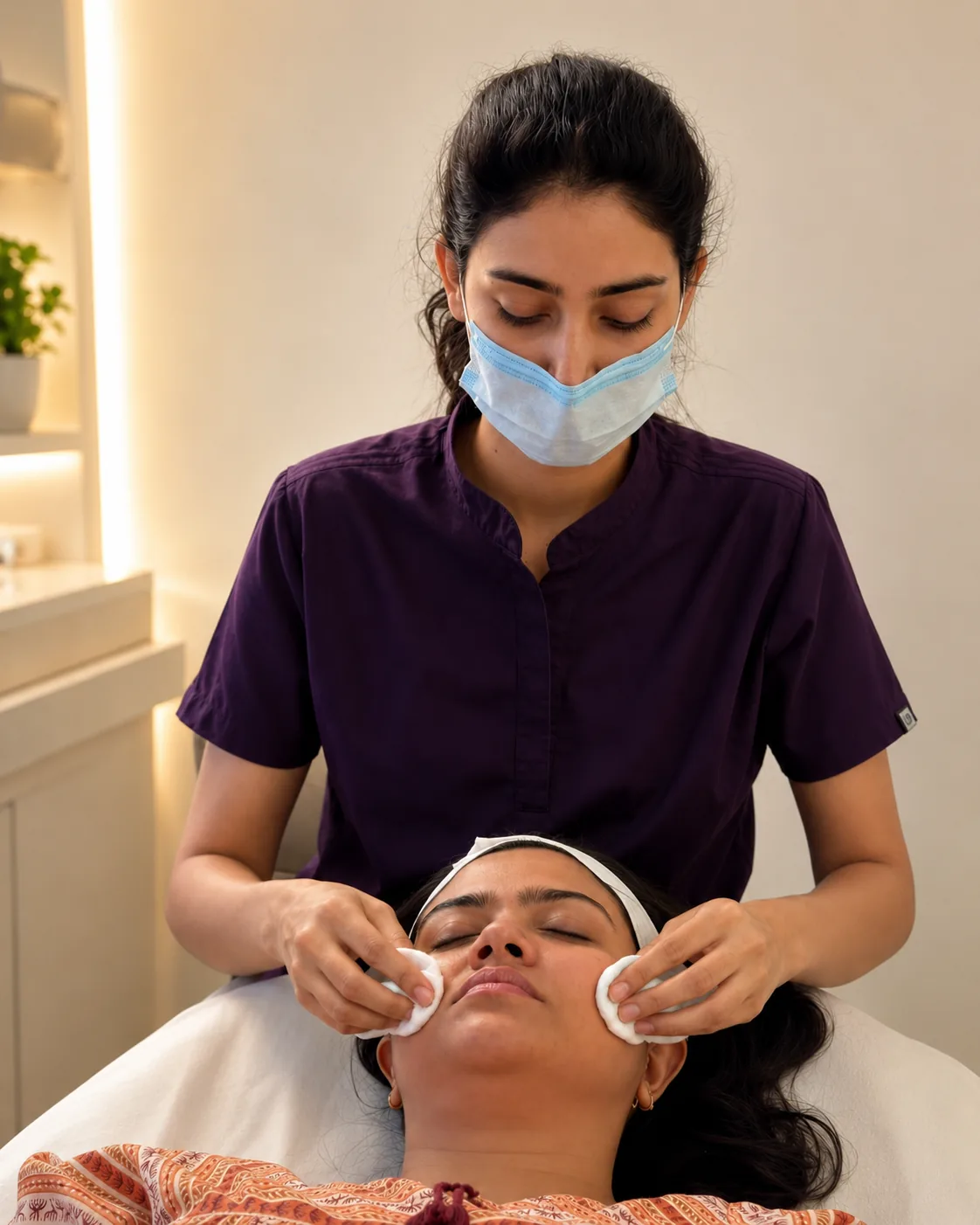
A warm, slightly tingling gel for five to ten minutes, removed with cool water or steam; no frosting, no neutraliser, no peeling afterwards. Skin looks smoother and brighter immediately and feels softer for several days. Make-up can go on the same evening. The effect is a reset of the surface, not a change to the skin beneath, which is why it is repeated monthly or used as the exfoliation step inside a broader facial rather than as a treatment in itself. Results vary from person to person.
Where we use Pumpkin Enzymes (Enzyme Peels) at AI Aesthetics
The treatments at our C-Scheme clinic that actually include it — each page explains the full protocol, suitability and price.
Pumpkin enzyme peel: frequently asked questions
What is a pumpkin enzyme peel?
A gel peel whose active ingredients are protein-digesting enzymes from pumpkin, plus carotenoids, vitamin C and zinc. The enzymes cut the protein bonds holding dead surface cells, lifting them away at near-neutral pH without the sting or sun sensitivity of an acid.
How is an enzyme peel different from a chemical peel?
An enzyme peel digests the bonds between dead cells and stops when removed; an acid peel lowers the skin’s pH to loosen cells and can reach deeper. Enzymes give immediate glow with no downtime; acids change the skin over a course.
Is the pumpkin peel safe in pregnancy?
Under our treatment-planning constraints it is one of only two peels permitted in pregnancy, alongside the Party Peel and the hydradermabrasion system. Acids and energy devices are excluded.
Does an enzyme peel help pigmentation?
It brightens by clearing dull surface cells and adds mild antioxidant support, but it does not treat melasma, dark spots or deep pigmentation. Those need brighteners, acid peels or the Q-switched laser.
Can sensitive skin have an enzyme peel?
It is the exfoliation we choose for sensitive, reactive and barrier-compromised skin, because it works without lowering pH. A patch test is wise for anyone with plant or latex allergies.
Will I peel afterwards?
No. There is no visible peeling, frosting or downtime; at most an hour of mild pinkness. Make-up can be worn the same evening.
How often can I have a pumpkin peel?
Monthly as a standalone, or as the exfoliation step inside an AI Customized Facial when the scan calls for gentle exfoliation.
Is it good before a wedding or event?
Yes — two or three days before a function it gives glow without the risk an acid peel carries that close to the date. Our event rule withholds medium peels within seven days of travel or an event.
Who should not have an enzyme peel?
Anyone allergic to pumpkin, papaya, pineapple or latex, skin with open wounds or sunburn, active pustular acne, and anyone within a week of a laser or medium peel.
Does it make skin sun-sensitive?
Minimally — far less than an acid peel. Sunscreen is still applied in clinic afterwards, as it is after every facial.